
No products in the cart.
Blog
Water Resistance: What Most Buyers Get Wrong
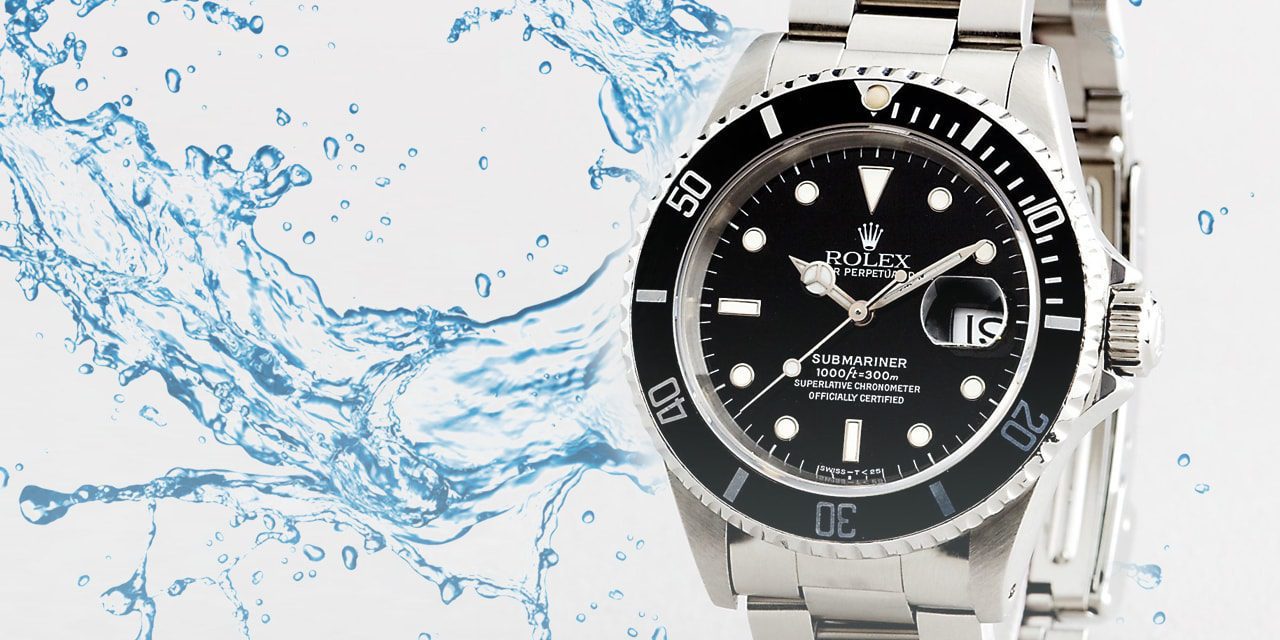
People fixate on the number. I get it—the dial is right there, and it feels measurable. But “meters” on a replica watch (or any watch) isn’t a direct “how deep can I go” promise. It’s mostly a shorthand for how the case is sealed and how that seal holds up under test conditions.
So when you see 30m, 50m, 100m, or 300m, don’t treat it like a depth gauge. Treat it like a clue. The real story is whether water has an easy path into the case over time.
What Those Water-Resistance Numbers Actually Mean
Most buyers look at the rating and assume it maps neatly to real life. It doesn’t. The test that produces the number happens under controlled conditions—steady pressure, consistent temperature, and brand-new seals.
In everyday wear, conditions aren’t steady. You get temperature swings, you use the crown, and gaskets age. Case construction, crown use and the condition of the seals all affect how the watch handles moisture and pressure in real life. That’s why seasoned buyers don’t stop at the printed spec.
- Water resistance depends on sealing quality, not just “depth.”
- Ratings are tied to test conditions that don’t perfectly match real life.
- Aging gaskets and wear can change performance faster than people expect.
For most people, the goal isn’t swimming. It’s being able to keep wearing the watch when life happens—rain, dishwater, washing your hands, or a quick splash that would be annoying to worry about.
A good seal turns those moments from “should I take it off?” into “no big deal.” You’re not looking for hero-level performance. You’re looking for consistency.
Crown, Gaskets and Where Water Gets In
If you want to understand where trouble starts, look at the crown. That’s where the watch interfaces with the wearer, and it’s also one of the main sealing points inside the case.
Threading matters. A properly threaded crown helps the case maintain its seal. A poorly fitted crown can cause water ingress even if the dial says something impressive. And yes, you’ll stress that seal every time you adjust it.
Gaskets don’t get the attention they deserve. They’re hidden, they’re compact, and they’re easy to overlook. Still, they’re what keep moisture out around key openings.
They form seals around the crown area, the caseback, the crystal, and on some models, chronograph pushers. When those seals are installed right and still in decent shape, the watch behaves more like the rating suggests. When they’re worn, pinched, or poorly maintained, the printed number becomes less meaningful.
Why Pressure Testing Matters
Lots of watches claim water resistance. Fewer ones are actually tested the way buyers assume. Pressure testing is the checkpoint that verifies the case can hold its seal under controlled conditions.
Some higher-end replica builds go through pressure testing before shipping. That doesn’t mean the watch becomes indestructible. It just means someone checked the sealing performance at that moment, instead of relying on a spec sheet.
That’s also why pressure testing belongs within the wider pre-shipment QC process rather than being treated as a permanent guarantee.
Chronographs complicate the water-resistance story. Each pusher is another place where the case needs a reliable seal. That adds more parts, more interfaces, and more chances for a quality-control slip.
Watches with a Daytona-style layout get discussed a lot for this reason. The good news: a chronograph can still be water resistant. The engineering is just more demanding, and the assembly needs to be tighter.
Why Water Resistance Changes Over Time
Water resistance isn’t permanent. Even a well-built watch changes. Gaskets harden and compress over time. Lubrication can dry out. Components wear. Seals don’t “stay new” forever.
So a watch that handled daily splashes perfectly a few years ago may not perform the same way today. That applies to genuine luxury watches too—and super clone watches aren’t immune. Regular maintenance and sensible handling matter for long-term reliability.
Most people don’t need the highest possible rating. They need confidence that the watch will survive normal life without constantly second-guessing it.
For daily wear, focus on build quality where it counts: secure crown fit, properly installed gaskets, and careful assembly. Those details don’t always show up in photos. They show up later, when the watch still feels trustworthy after months of regular use.
What Buyers Should Actually Look For
As watch communities grew, buyers stopped asking only the surface question. The old default was “what’s the water-resistance rating?” The better follow-up became “has it been pressure tested?”
That shift matters because a realistic test outcome tells you more than a number printed on a spec sheet. It gives you a snapshot of whether the seal was actually verified, not just claimed.
For first-time buyers, water resistance is only one part of what should be checked before ordering. The wider super clone watch buying guide covers movement choice, QC, factory differences and other details that matter before choosing a watch.
Water resistance is one of those specs people ignore until they need it. When it’s handled properly, you barely notice it. The watch just keeps working, sealed and reliable.
And that’s the point. Not whether a watch can survive some extreme scenario. It’s whether you trust it when your day gets wet—rain, washing, splashes, and all the small moments you didn’t plan for.