
No products in the cart.
Blog
Clone Movement vs Swiss ETA
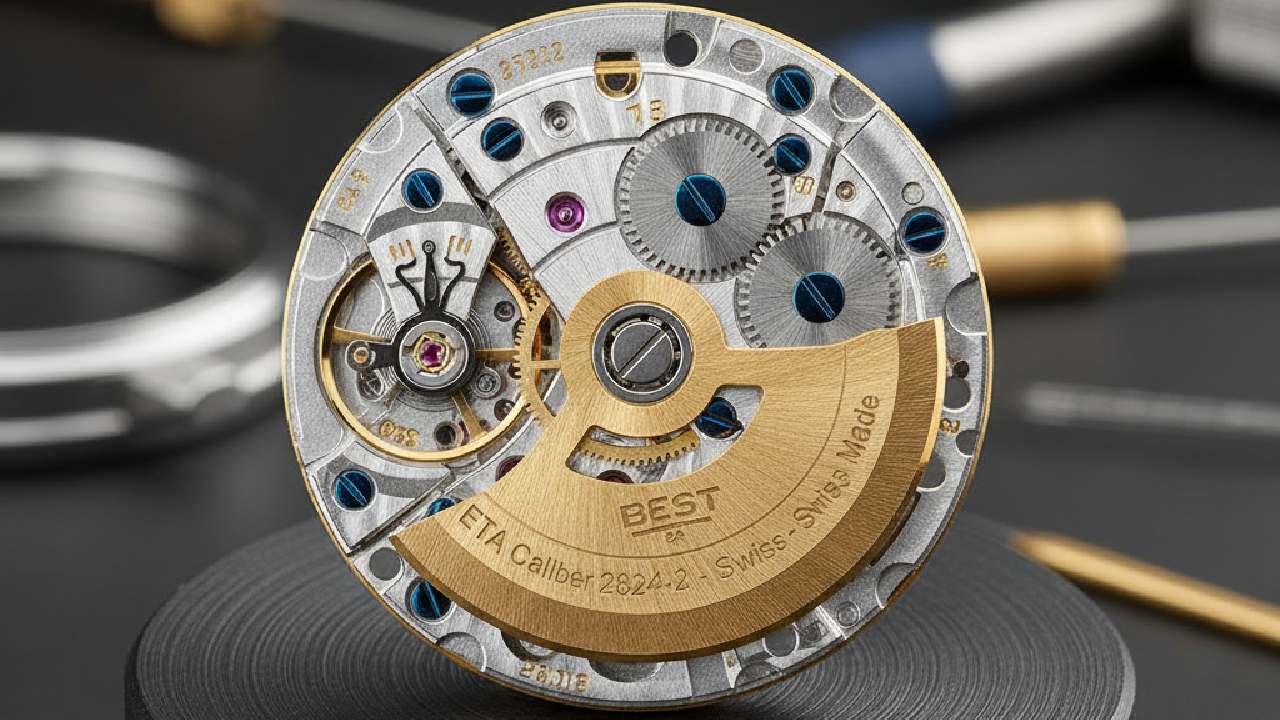
A few years back, writing about watch “quality” was almost too easy. You could point to ETA, nod once, and call it a day. But the market doesn’t work like that anymore.
Clone movements improved. Factories put money into movement development instead of treating it like an afterthought. Buyers learned what to look for, and they started sharing comparisons that went beyond spec sheets. So the old, simple split between traditional Swiss ETA and modern clone movements doesn’t land the same way it used to.
That doesn’t mean they’re interchangeable. Not even close. What it does change is where people notice the differences—especially after a watch has been on their wrist for a while.
What You Actually Notice From a Movement
When people compare movements, they usually lead with numbers. Beat rate. Power reserve. Jewels. Accuracy. None of that is nonsense.
Still, those details don’t usually hit you first. In daily use, owners notice smaller things:
- How the crown feels in-hand
- Whether winding feels smooth or gritty
- How the date changes—cleanly or with odd resistance
- How quiet the rotor is during motion
- Whether the watch keeps feeling consistent after months
Most buyers don’t sit there counting jewels. They just live with the watch. That’s why movement “spec” comparisons can miss the real point.
ETA became a benchmark for a reason. The simple answer is reliability.
For decades, ETA movements powered watches across a huge range of brands. Watchmakers knew how they behaved. Parts were easier to find. Service was familiar and, in many cases, straightforward.
The bigger advantage wasn’t flash. It was confidence. If a buyer bought a watch with an ETA inside, they usually had a clear expectation of what ownership would feel like—no surprises, no mystery.
Early clone movements earned their reputation. Some were inconsistent, and that mattered to anyone who actually serviced watches or lived with them long-term.
One movement might run nicely. Another from the same general category could behave differently. Quality control wasn’t uniform, and that inconsistency made experienced buyers default to ETA when reliability was the priority.
Back then, that advice made sense because the results weren’t evenly matched.
How Calibre-Matched Clone Movements Changed Things
Then the clones got better. Factories started treating movement development as a real project instead of a convenient shortcut.
Rather than using a one-size-fits-most approach across many models, some makers developed calibre-specific clones. You’ll hear names like clone 3235, clone 3285, clone 3255, clone 4130, and clone 4131—each tied to replicating a specific reference’s behavior, not just fitting inside the case.
That shift changes how the watch feels in use. It’s not only about internal performance; it’s also about how the layout and functions behave when you interact with the watch day to day.
ETA movements are often general-purpose by design. That’s part of why they’ve been so widely used. They’re versatile, reliable, and easier to service.
Calibre-matched clones take a different approach. They’re made to replicate the reference movement’s architecture more closely. That shows up in details like:
- Hand positions that match what owners expect
- Complication layout that lines up correctly
- Function behavior that feels closer to the genuine model
- Model-specific operation, not just “it kind of works”
So when people say a modern super clone “feels like the original,” they’re usually talking about these interaction-level differences, not some abstract spec.
Look at the Daytona. It’s an obvious test case because the chronograph experience is something buyers actually operate.
In earlier years, many Daytona replicas used modified movements that looked fine from a distance. The problems showed up when you used the chronograph. Subdial layouts didn’t behave the same way. Functions felt off. Pushers had a different feel. The whole experience gave away the gap.
When clone 4130 movements became more common, the chronograph behavior aligned much more closely with what buyers expected. The watch stopped feeling like a visual approximation and started behaving like a proper replica of the reference.
That’s why you hear fewer Daytona buyers asking for ETA-based alternatives now. The clone movement simply makes more sense for the specific watch experience they’re trying to reproduce.
Where Swiss ETA Still Makes Sense
This isn’t a one-way story. ETA still earns loyalty.
Watchmakers know the movements. Replacement parts are widely available. Servicing tends to be straightforward. Some owners genuinely like that simplicity, and they don’t care whether the architecture matches a specific reference down to the last detail.
They just want a dependable movement they can maintain without drama. ETA fits that need well, and plenty of buyers still prefer it for exactly that reason.
After you’ve had a watch for a while, the conversation stops sounding academic. Your questions become more personal.
How does the crown feel day after day? Does winding stay smooth? Is timekeeping stable enough that you don’t think about it? How does the date mechanism hold up? Most importantly, do you still enjoy using the watch, or do small annoyances start to grate?
Those are the real-world signals people end up prioritizing, because they’re the signals you live with.
And reliability isn’t just the movement.
People talk about movements like they’re running the show by themselves. They aren’t. Assembly quality matters. Lubrication matters. Overall quality control matters. The same movement can behave differently depending on how the watch was built and maintained.
That’s why factory reputation can weigh as much as movement choice, especially when you’re buying something you expect to wear frequently.
So What Do Buyers Choose Now?
A decade ago, many buyers would’ve leaned toward Swiss ETA. Today, the answer depends on the watch.
For references like a Datejust, GMT-Master II, Day-Date, Sky-Dweller, or Daytona, experienced buyers more often lean toward calibre-matched clone movements. Not because ETA got worse as a concept, but because the modern clones improved enough that the ownership experience feels closer to the genuine reference.
That’s what many people wanted: fewer gaps between what the watch looks like and what it does.
The debate isn’t really “clone movement versus Swiss ETA.” It’s about what you care about more.
If you value proven simplicity, easy serviceability, and a reputation built over decades, Swiss ETA remains a sensible pick.
If you value model-correct functionality, movement architecture that lines up, and an ownership experience that tracks the reference more closely, modern calibre-matched clones are hard to ignore.
Neither choice is wrong. They solve different problems.
It Ultimately Comes Down to Priorities
Most buyers start out hoping there’s a clear winner. They usually end up realizing the answer depends on what they’ll actually notice on the wrist.
Swiss ETA earned its trust through consistent, dependable performance. Modern clone movements earned attention by improving beyond what many people expected. Today, the decision often comes down to priorities, not “superiority.”
And that’s probably the clearest sign that clone movement technology has genuinely moved forward.