
No products in the cart.
Blog
VSF Daytona 4131 Movement and Weight Comparison: What the Factory Photos Reveal
Weight rarely gets much attention until a watch is in someone’s hand. A Daytona may look convincing until it is picked up and feels noticeably too light compared with the genuine model.
The issue is sharper with heavier precious-metal Daytona configurations. The number on a scale is part of the appeal, but where that mass sits changes the feel as well.
VS Factory has published comparison images for weighted Daytona models fitted with the Dandong 4131 movement. The first thing visible is the case profile: when it is wrong, the lugs look too thick and the watch sits with a heavier, less natural shape than the reference.
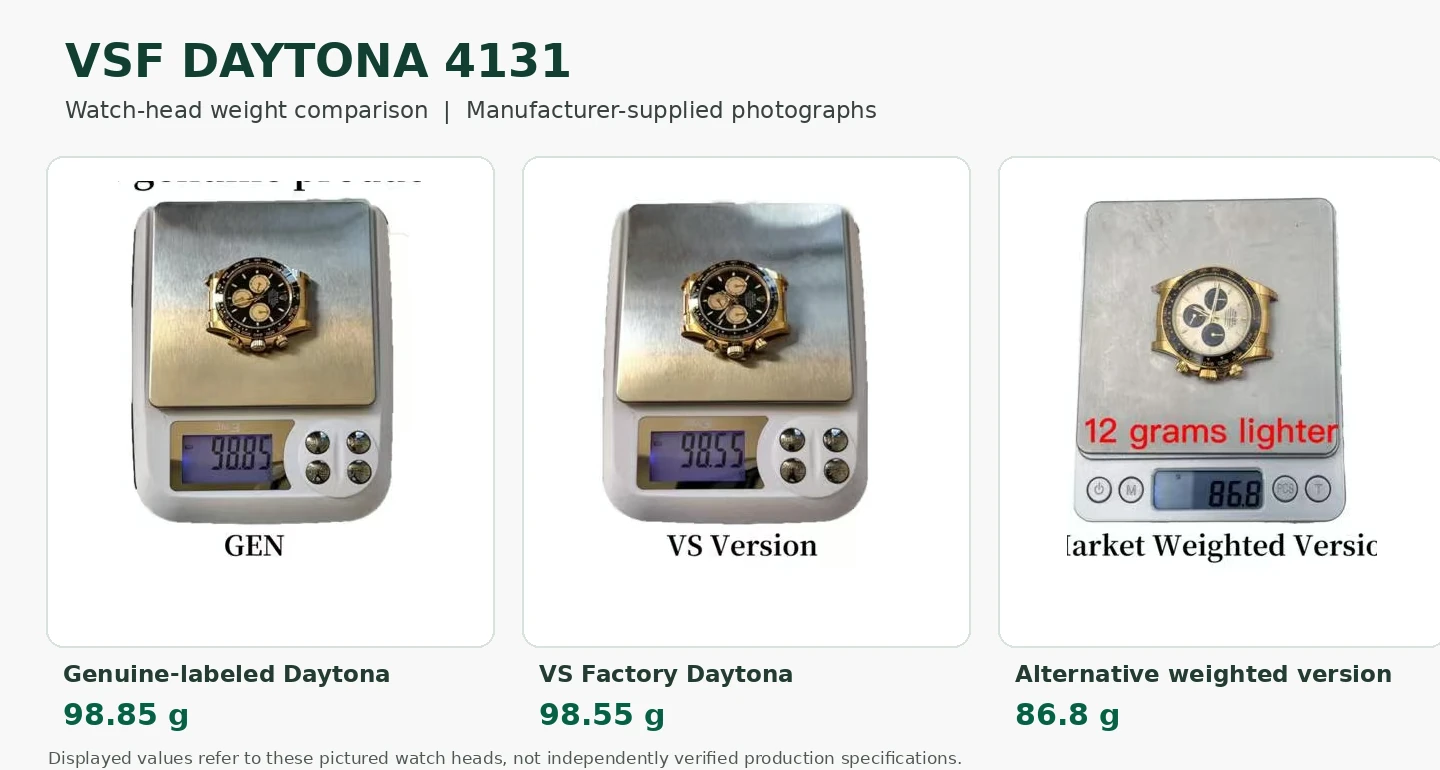
One image carries most of the argument. It shows a genuine-labeled Daytona watch head at 98.85 grams, a VS Factory version at 98.55 grams, and another weighted aftermarket version at 86.8 grams. The first two figures sit remarkably close together, though the photo still leaves plenty unanswered about how each watch reached its number.
These are manufacturer-supplied comparisons, not independent test results. They tell us something useful about the specific samples shown. They cannot establish how every production watch is built or how its components will hold up over years of use.
Why Weight Matters in a Daytona Comparison
A watch’s weight comes from the whole package: case dimensions, material density, bracelet construction, movement, crystal, and the other parts inside. Buyers sometimes lean too hard on one number because it feels objective. It is objective, within the limits of the particular item on the scale, but it is not a complete description of the watch.
Steel Daytonas get much of their familiar heft from the steel case and bracelet. Gold and platinum versions shift the calculation because those metals are substantially denser than stainless steel. A precious-metal configuration can feel different even before anyone starts comparing finishing or movement details.
Distribution matters as much as total mass. Put a heavy case on a light rubber strap and the first thing you notice is the watch head pulling toward the top of the wrist, with the strap doing little to balance it. Fit a similarly weighted head to a solid metal bracelet and the sensation changes because the bracelet carries part of the load. That is why the original Rolex Daytona’s configuration needs to stay in view during any replica-weight comparison.
Two watches can also land on nearly identical readings while looking different in the hand: one case feels noticeably thicker because it uses more material, while another reaches the same weight with a denser metal and less volume. VS Factory’s promotional material is built around that distinction.
The Weight Test: Genuine Daytona vs VS Factory vs Aftermarket Version
On the digital scale, the alternative weighted aftermarket Daytona-style head is the first one that looks wrong: at 86.8 grams, it sits noticeably below the genuine-labeled example at 98.85 grams and the VS Factory weighted model at 98.55 grams.
That puts the VS Factory sample 0.30 grams below the genuine-labeled watch head. The alternative sample is about 12.05 grams lighter. For the watches pictured, the VSF head reaches almost exactly the same overall mass as the comparison sample. That is the factory’s central selling point, and it is far more concrete than saying a watch merely feels heavy.
The obvious follow-up is how the extra weight was achieved. The source says some alternative weighted cases rely on more thickness or on material added through less durable construction methods. VS Factory says it took another route: a custom heavy-metal case intended to stay close to the genuine Daytona’s external dimensions.
The photographs confirm the readings visible on the scales. They do not identify the alloy, establish that every dimension matches, or show what lies beneath the finished surfaces. What stands out first is the bare watch head, with its lugs exposed and no bracelet or strap attached; once fitted with a bracelet and clasp, the full-watch figures could move considerably.
How Close Is 0.30 Grams?
On a watch head that weighs nearly 99 grams, 0.30 grams is a very small gap. Distinguishing it through normal handling alone would be difficult. The scale tells a clear story about overall mass; construction remains a separate question.
The first thing to notice is the scale reading: the pictured VSF sample reaches approximately the same watch-head weight as the genuine-labeled example. If its construction differs, that difference is not visible in the total weight alone; a heavier caseback or thicker walls could produce the same reading. Sorting that out would mean measuring individual components and examining the case itself. The image does not prove identical materials.
Weighted Case Construction: Why Thicker Is Not Always Better
The case claim is probably the more interesting part of the VS Factory material. One promotional image shows damaged metal with an irregular patch where a coating appears to have separated from the surface. The factory presents the image as a warning about alternative weighted cases made with plated or layered construction.

The accompanying text says some manufacturers increase weight by thickening the case or using tungsten-containing materials followed by electroplating. According to the supplier, oxidation or weak adhesion can lead to deterioration in the plated surface. In the image, the first noticeable feature is the deteriorated plated surface, illustrating the type of failure under discussion without identifying the component itself.
On a plated metal product, the first sign of poor application is often a small blister lifting from the surface where preparation was inadequate. That is a real concern with plated metal products. One damaged part is still one damaged part. It cannot establish that every competing weighted case uses the same method or develops the same issue.
What VS Factory Claims to Have Changed
VS Factory describes its weighted Daytona as using a specially developed heavy-metal case. The original Chinese text makes two linked claims. The factory says the exterior dimensions were designed around the genuine watch instead of being enlarged just to hit a target weight, and it says its material and finishing process avoids the peeling associated with certain competing constructions.
Those are sensible objectives. If a case grows thicker, its proportions can shift in ways that show up once the watch is worn: the space from caseback to crystal may change, the lugs may take on a different profile, and the watch may sit differently on the wrist. A denser material could, in theory, add weight while preserving those dimensions.
Supplier copy cannot settle what material is actually present. The first thing to inspect is the case itself: when its finish shows a thin coating wearing through at an edge, the underlying material is what needs examination. Until that happens, the heavy-metal construction and improved coating durability remain manufacturer claims.
The Dandong 4131 Movement Inside the VSF Daytona
Weight is only one part of the comparison. VS Factory also puts the Dandong 4131 movement at the center of its Daytona package. The genuine Rolex calibre 4131 is an automatic chronograph movement introduced with the updated Daytona generation in 2023. It replaced the earlier calibre 4130 and brought changes to construction, finishing, and efficiency.
The Dandong 4131 is an aftermarket movement designed around that newer chronograph architecture. Sharing a calibre number does not make it an authentic Rolex movement. The promotional material identifies the movement being marketed, but the supplied images do not provide a complete disassembled technical comparison of the 4131.
There is a hard limit to what a movement name and a few photos can establish. The source offers no basis for comparing individual gear dimensions, escapement performance, lubrication, or long-term reliability with the genuine calibre. Those questions require more than a specification sheet.
Why a Calibre-Matched Chronograph Matters
Chronographs are mechanically more involved than ordinary three-hand watches. Beyond basic timekeeping, the movement has to start, stop, and reset elapsed-time indications. Pusher feel, synchronization of the chronograph hands, and reset behavior all show up in use.
A movement built around the intended chronograph layout may fit and operate more naturally than one adapted from a substantially different mechanism. Execution decides the result. Component quality, adjustment, and final assembly determine whether a chronograph functions consistently. For Daytona comparisons, the movement designation is a starting point, not a final quality verdict.
Close-Up Details: What the Factory Wants Buyers to Notice
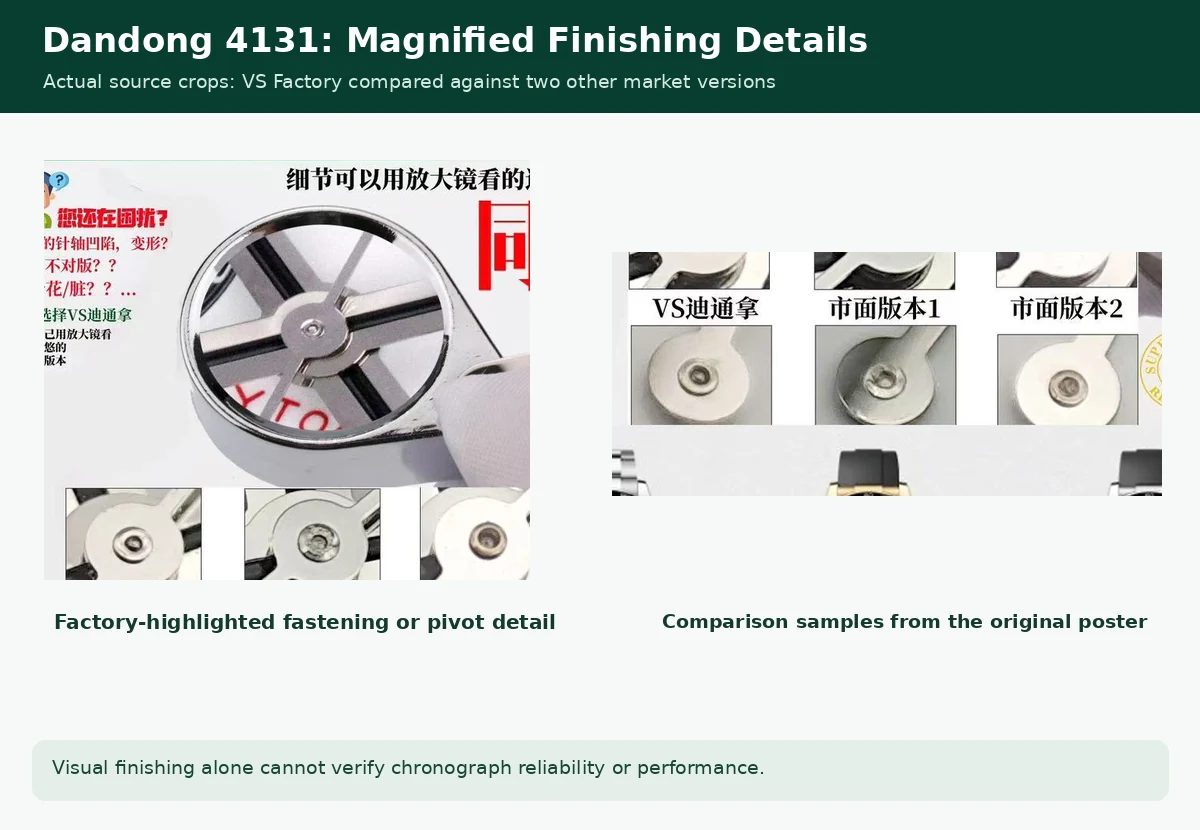
Another group of photographs shows a Daytona with a light blue dial, followed by enlarged views of small finishing details. The Chinese promotional text asks buyers to inspect components rather than judging the watch only from a distance.
The highlighted point is a circular fastening or pivot detail shown under magnification. VS Factory places its example beside two other aftermarket versions. Look closely at the center of that recess: the comparison draws attention to the fastening shape, the metal immediately around it, and the finish left inside the circular opening.
These are tiny components. From ordinary viewing distance, the distinctions would be hard to pick out. Magnification makes machining marks, uneven borders, and surface-treatment differences easier to see. The photos are useful because they identify exactly where the factory wants the comparison made.
They are weaker evidence for any broader claim of superiority. A cleaner-looking fastener does not establish that the chronograph mechanism is more accurate, more durable, or more reliable. It is one small observation in a much larger assessment.
Daytona 126500LN, 126518LN and Other Versions Shown

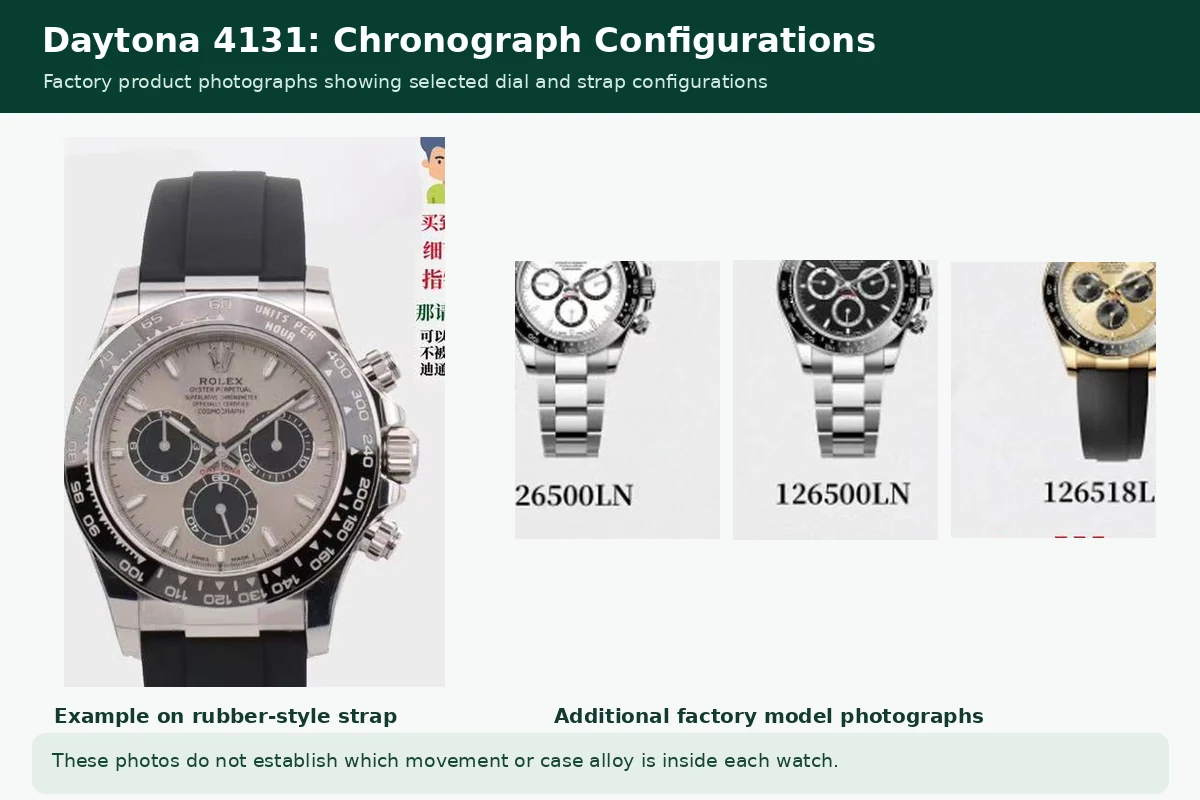
The promotional material covers several Daytona-style configurations rather than one watch. The references shown include 126500LN, 126518LN, 126519LN, plus two dial variants identified as 126506-01 and 126506-02. They represent different case, dial, material, and bracelet combinations, so treating them as interchangeable in a weight discussion would be a mistake.
A steel Daytona on a metal bracelet is physically configured differently from a precious-metal Daytona on an elastomer strap. The bracelet and clasp alone can substantially alter the total figure on a scale. A factory may also use different case constructions across its range. The images show which configurations VS Factory was promoting; they do not provide verified weight measurements for every reference pictured.
Rubber Strap and Bracelet Details
The last promotional image shows two curved rubber-style strap components with their metal fittings. Its Chinese annotation says selecting the correct version matters. Fair enough. Strap fit comes down to the end shape and attachment dimensions, especially at the point where the strap meets the case.
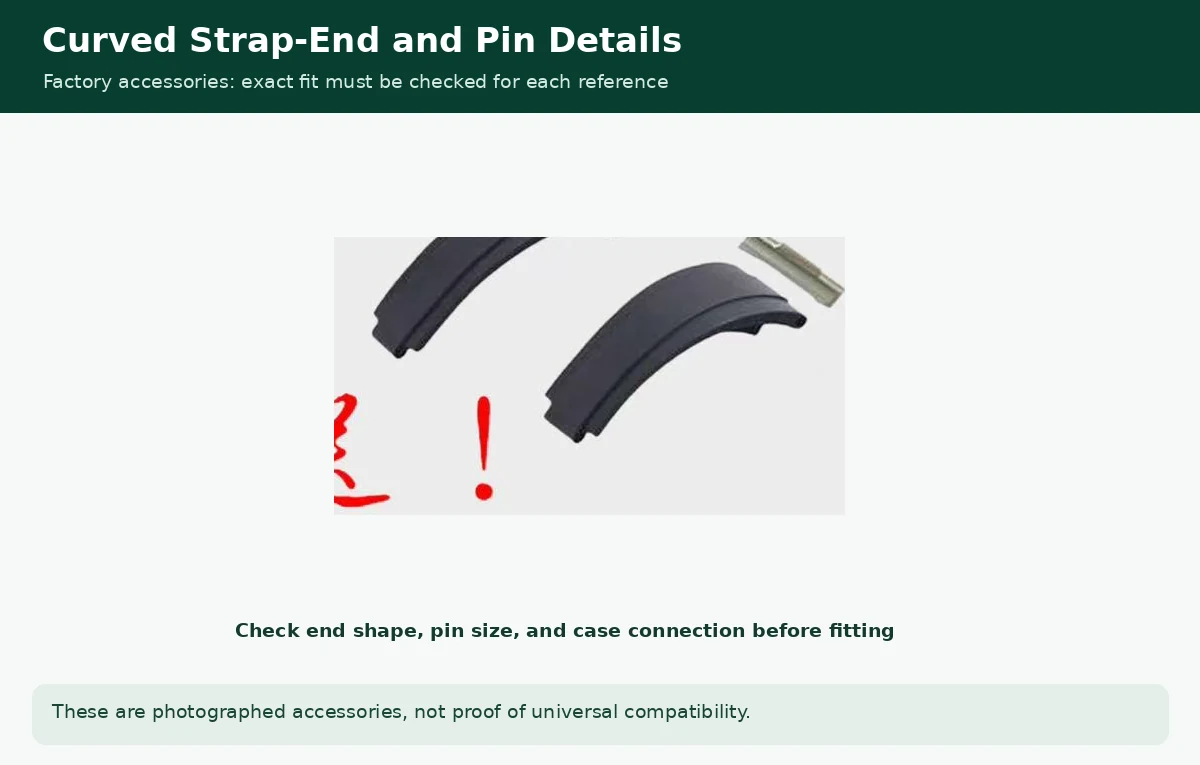
Different Daytona-style references can use different bracelet or strap arrangements. A component may resemble the correct one in a product photo yet still fail to fit properly. The image indicates a supplied strap-component option, not universal compatibility across Daytona references.
Does Matching the Genuine Weight Make the VSF Daytona Better?
The weight comparison is genuinely interesting. A VS Factory sample displayed at 98.55 grams beside a genuine-labeled sample at 98.85 grams gives buyers something real to compare. It says more than a broad claim about heft.
Weight remains one part of construction. A complete evaluation would need to look at case dimensions and material composition, then move to surface durability, chronograph operation, movement regulation, and the finish of individual components. The weighted-case claim deserves especially close scrutiny because external photographs cannot fully verify what is beneath the surface.
A case can look correct when new and behave differently after extended wear, moisture exposure, or repeated contact with clothing. The Dandong 4131 designation also cannot guarantee that every assembled watch received the same degree of adjustment. The advertised specification and the individual watch supplied are not interchangeable.
What We Can Learn From These VS Factory Photos
The photos are strongest on the displayed weight measurement. The pictured VSF example reads 98.55 grams, close to the 98.85-gram genuine-labeled example. That is the clearest numerical evidence in the material.
VS Factory’s case-construction argument is the next substantial point. It says the weighted case was developed to preserve the original proportions without adding thickness simply to chase mass. The reasoning is understandable, while the source still leaves the materials and dimensions unverified.
The enlarged fastening-point photos also make a useful case for looking past the dial. They show where small finishing differences can appear, though those close-ups need to sit alongside actual mechanical and material testing rather than stand in for it.
Anyone interested in wider differences between aftermarket calibre-matched movements can read our guide to clone movement construction.
VS Factory is positioning these weighted Daytona models around more than outward appearance: the pitch combines weight, case construction, and movement choice. The photographs give buyers a reason to inspect those claims more closely. They do not settle them.
Editorial note: This article examines VS Factory promotional images containing Chinese and English annotations. The stated case-weight measurements, material specifications, movement attribution and construction claims have not been independently verified. The genuine-labeled watch shown in the comparison has not been authenticated for this article.