No products in the cart.
Official 1:1 Super Clone Category
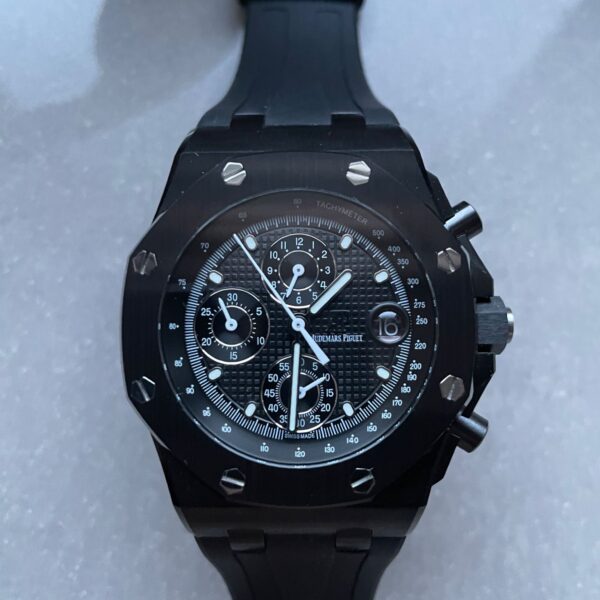
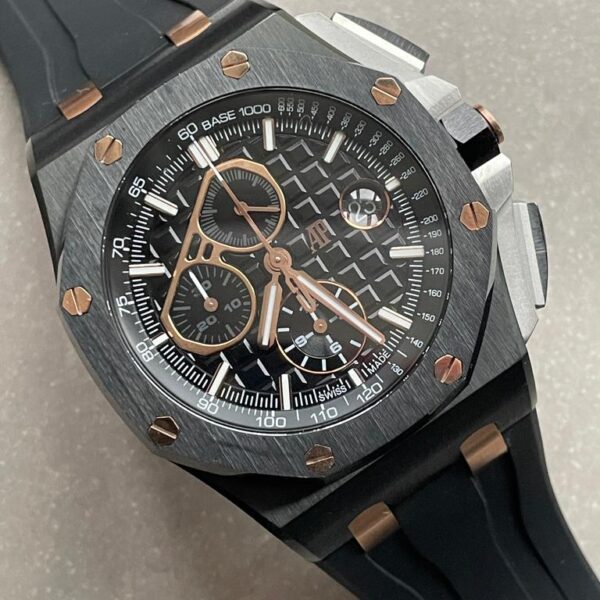
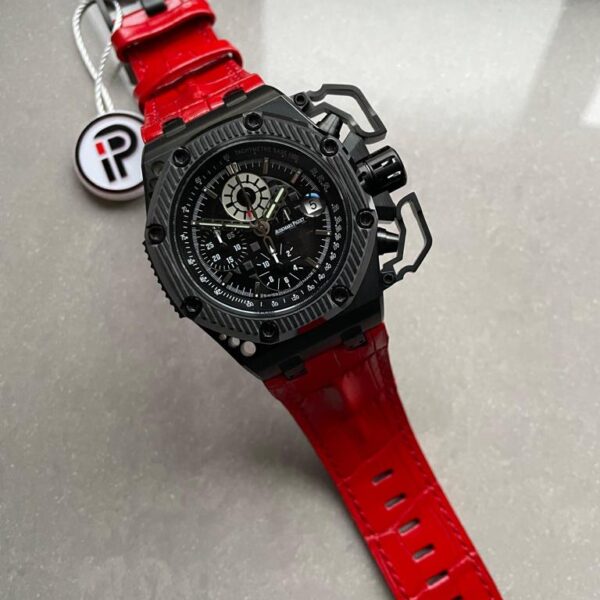
Royal Oak Offshore
Audemars Piguet Royal Oak Offshore Super Clone Watches
The Royal Oak Offshore is not just a larger Royal Oak.
That sounds obvious once you have handled both, but photographs can make them seem much closer than they really are.
The Offshore is thicker, more aggressive and generally much busier. Pushers sit beside the crown. Chronograph counters fill the dial. Rubber straps replace the integrated bracelet on many references. Cases appear more layered, and ceramic, carbon-style materials and precious-metal finishes show up everywhere.
All of that gives factories more opportunities to get things right.
And more opportunities to get them slightly wrong.
Our Audemars Piguet super clone collection covers the wider AP range, while this section concentrates specifically on Royal Oak Offshore models across different sizes, dial layouts, case materials, movements and factories.
If you are still learning how replica factories and movements differ, our super clone watch buying guide is worth reading before choosing an Offshore purely from the factory name.
Royal Oak vs Royal Oak Offshore
They share enough design language that people naturally compare them.
The octagonal bezel is there.
The exposed screws are there.
You still have the unmistakable AP case shape.
But the Offshore takes everything further.
The case is more substantial. The crown and pushers become part of the visual design. Many models use rubber straps rather than a full integrated bracelet, and chronograph layouts introduce much more information onto the dial.
A regular Royal Oak can disappear under a cuff.
An Offshore generally has no interest in disappearing.
If you like the AP shape but want something relatively restrained, the traditional Royal Oak makes more sense.
If you want the case itself to have presence, that is where Offshore starts becoming interesting.
Royal Oak Offshore 43mm Super Clone Watches
The modern 43mm Offshore is a substantial watch.
That makes proportions especially important.
A replica can technically measure around the correct diameter and still wear strangely because the case is too tall, the bezel is too thick or the strap leaves the case at the wrong angle.
This is why I would never evaluate a 43mm Offshore using only the front photograph.
Look at the side.
Look at the crown and pushers.
Look at the way the caseback, middle case and bezel stack together.
Then look at the strap.
With a watch this large, a small proportion difference becomes a fairly large physical difference on your wrist.
Royal Oak Offshore 26420
The 26420 family is one of the references buyers are likely to encounter when looking at newer Offshore replicas.
There are steel, titanium-style and ceramic configurations, along with different dial colors and factory versions.
This is one of those watches where the complete shape matters more than one perfect dial detail.
Look at how the bezel sits over the case.
Then look at the pushers.
Then the crown guards.
Then the strap connection.
If those proportions work together, the watch starts looking right before you have even inspected the dial closely.
If they do not, no amount of perfect printing is going to completely fix the impression.
Royal Oak Offshore Chronograph Super Clones
This is where I would spend more time during QC.
A three-hand watch has relatively little to test.
A chronograph gives you more.
Start it.
Stop it.
Reset it.
Watch the central chronograph hand.
Look at whether the counters behave as expected for the movement installed.
Then pay attention to the pushers themselves.
Do they engage cleanly?
Does one feel noticeably different from the other?
Does the reset return the hands where they should be?
A Royal Oak Offshore can photograph beautifully while hiding poor chronograph operation.
That is why I would never make the purchase decision from product photography alone.
Subdial Spacing Is Worth Checking
The Offshore dial is busy enough that small placement differences can hide surprisingly well at first.
Then you notice them.
One counter looks slightly too close to the center.
Another seems too low.
The date ends up squeezed into a space that does not quite feel natural.
Movement architecture affects where chronograph counters can sit, so the movement underneath the dial matters visually as well as mechanically.
Do not inspect each subdial in isolation.
Look at the triangle they form across the dial.
The empty space between them tells you as much as the counters themselves.
AP Offshore Clone Movements
Movement names can make these watches sound simpler than they are.
A listing gives you a calibre number and suddenly it feels as if you know exactly what is inside.
Not necessarily.
Replica movements can use clone architecture, modified base movements or decorative components depending on the reference and factory.
I would concentrate on what the actual movement does.
How does winding feel?
How does time-setting feel?
Does the date operate correctly?
Does the chronograph function properly?
Is the movement running consistently?
Those questions are much more useful than simply deciding one calibre number must be superior to another.
If movements are an important part of your decision, our clone movement vs Swiss ETA guide explains the trade-offs in more detail.
The Offshore Bezel Needs to Look Sharp
The bezel is one of the easiest AP details to recognize.
Eight sides.
Eight screws.
Simple enough.
Except the edges, screw seating, brushing and relationship with the case all affect how it looks.
A poorly finished bezel can appear soft.
The corners lose definition.
The surface looks too polished or the brushing becomes too coarse.
Then the screws start attracting attention for all the wrong reasons.
I would check the whole octagon first.
Does it look balanced?
Only then would I start looking at individual screws.
Do Not Spend an Hour Measuring Bezel Screws
This deserves its own section because AP buyers do it constantly.
You open a QC photograph.
You zoom in.
One screw slot looks slightly different.
Then you draw a line across it.
Twenty minutes later you are inspecting eight screws independently.
Perspective matters.
The watch may not be perfectly square to the camera. Light can change the appearance of the recesses. The bezel itself may be tilted slightly in the photograph.
If one screw is obviously wrong, that is useful information.
If you need digital geometry to prove something might be fractionally different, keep it in perspective.
Case Thickness Matters on the Offshore
A thick watch is supposed to be thick.
That does not mean any thickness looks correct.
The Offshore works because the case has layers.
Bezel.
Middle case.
Caseback.
Crown and pusher assembly.
Those sections should look intentional rather than like a stack of unrelated components.
Side-profile QC photographs are extremely useful here.
If I had to choose between five additional dial photos and one clear side photograph, I would take the side photograph.
Royal Oak Offshore Ceramic Models
Ceramic suits the Offshore because the case already has so much visual structure.
Black ceramic can make a large watch appear slightly tighter and more technical.
It also hides some things.
Dark surfaces naturally disguise shadows and small finishing differences better than lighter colors.
That does not mean you should ignore finishing.
Look at the bezel edges.
Look at how brushed-looking and polished-looking surfaces meet.
Rotate the watch under light if video is available.
A ceramic case should not look like one flat piece of black material.
The finishing should still define the shape.
Titanium-Style Royal Oak Offshore Watches
Titanium-style models create a different expectation.
They look substantial.
They should not necessarily feel like a solid block of steel.
That contrast between visual size and lower apparent weight is part of what makes lighter-material sports watches interesting.
Again, do not judge quality simply by putting the watch on a scale.
Weight distribution matters.
A large case sitting on a poorly balanced strap can feel awkward even if the overall gram measurement looks impressive.
Rose-Gold Royal Oak Offshore Replicas
Gold-tone Offshores are not subtle.
That is probably the point.
The large case gives you a lot of colored surface area, which makes tone consistency more important.
Look at the bezel.
Then the case.
Then the crown and pushers.
If those pieces look like noticeably different shades under the same light, you are probably going to keep noticing it.
Rose-gold tones can also change dramatically under warm indoor light.
One studio photograph is not enough.
Video or several lighting conditions tell you more.
The Rubber Strap Matters More Than It Seems
People rarely get excited about a rubber strap in a product listing.
Then they wear the watch for eight hours.
Now it matters.
The Offshore case is large, so the strap has to control a lot of watch head.
If the rubber is too stiff, the watch can sit high.
If the curvature is wrong, it can pull against the wrist.
If the connection at the case leaves an ugly gap, you will see it every time the watch is viewed from the side.
Check the molding.
Check flexibility.
Check the clasp or buckle.
Then look at where the strap enters the case.
This is one of those details factory photographs rarely communicate well.
Royal Oak Offshore Diver Super Clones
The Offshore Diver strips away some chronograph complexity but keeps the muscular case.
That changes the QC priorities.
You have fewer subdials and no chronograph pushers competing for attention, so the dial, internal timing scale or bezel system, case proportions and strap become more prominent.
The simpler layout can actually make alignment problems easier to see.
Do not assume simpler means easier to reproduce.
Sometimes it just means there are fewer things available to distract your eye.
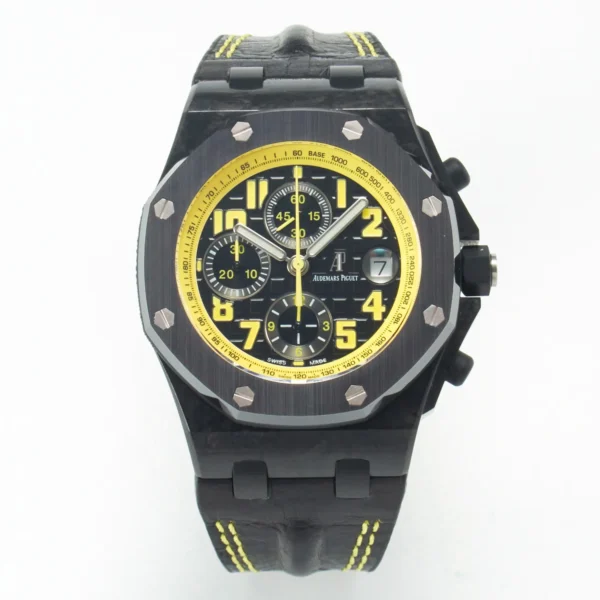
Safari, Bumble Bee and Other Offshore Variants
The Offshore is one of those collections where nicknames became part of how buyers talk about the watches.
Safari.
Bumble Bee.
End of Days.
Then there are blue, green, ceramic, carbon-style, diamond-set and countless other configurations.
The nickname is useful for finding the general watch.
Still check the actual reference and specifications.
Factories and sellers occasionally use familiar nicknames loosely, and you do not want to compare your watch against a slightly different generation because the product titles happened to sound similar.
Offshore Dial Texture and Color
A busy dial can hide a lot.
That is why I would look at it in stages.
First, normal viewing distance.
Does everything feel balanced?
Then subdials.
Then markers.
Then printing.
Then the date.
Blue, green and smoked dials deserve video where possible because they change considerably under different lighting.
A color that looks perfect under one photography lamp can feel very different in ordinary indoor light.
The Date Window
The date can get lost on an Offshore because there is so much else happening.
You will still see it every day once you own the watch.
Check more than one numeral where possible.
Single digits and double digits naturally fill a window differently.
You are looking for consistent positioning, not one number that happens to photograph perfectly.
If the date is visibly pressed against one edge or sitting unusually high, that is worth investigating.
If you need extreme magnification to discover a tiny difference, that is probably less important.
Diamond and Custom Royal Oak Offshore Watches
Once diamonds or moissanite are added, the watch becomes two QC jobs.
First, inspect the Offshore itself.
Does the chronograph work?
Is the dial aligned?
Does the case look correct?
Is the strap or bracelet functioning properly?
Then look at the setting.
Rows should look orderly.
Spacing should be reasonably consistent.
Stones should not obviously sit at different heights.
Bright lighting makes almost anything sparkle.
Clean setting is much harder to fake.
APSF, ZF and Other Offshore Factories
Factory discussions are useful up to a point.
APSF and ZF are names buyers often encounter around AP replicas, while different Offshore references can appear from other manufacturers as well.
I would not select an Offshore by factory first.
Choose the reference.
Then see who currently makes that reference well.
A factory that produces a convincing three-hand Royal Oak is not automatically the best choice for a large Offshore chronograph.
Different cases.
Different movements.
Different problems to solve.
Factories also revise their watches, so an old comparison should not be treated like a permanent ranking.
What We Check During Royal Oak Offshore QC
Start with the complete watch.
No zoom.
Does the case look balanced?
Does the bezel appear straight?
Are the chronograph counters sitting naturally?
Does anything jump out immediately?
Then look closer.
Check the bezel and screws.
Check dial markers and subdials.
Check the date.
Look at the crown, pushers and case from the side.
Check the rubber strap or bracelet connection.
Then operate the watch.
Wind it.
Set it.
Start the chronograph where applicable.
Stop it.
Reset it.
Finally, review the watch in motion.
Our guide to reading QC photos before approval explains how to inspect the actual selected piece without falling into the trap of treating every microscopic difference as a serious defect.
QC Video Is Particularly Useful on an Offshore
I would care about video more here than on a simple three-hand watch.
Photos cannot show how the pushers operate.
They do not show the chronograph reset.
They do not show how flexible the rubber strap is.
They do not show how ceramic or brushed surfaces change while moving under light.
And they do not show how thick the watch really feels as clearly as someone rotating it through several angles.
If the video is available, watch it.
Do Not Compare an Offshore Like a Regular Royal Oak
This is probably the biggest mistake buyers make with the collection.
They expect the same things from both watches.
The Royal Oak is about thinness, integrated-bracelet finishing and clean geometry.
The Offshore intentionally adds bulk and complexity.
A thicker case is not automatically a flaw.
A louder dial is not automatically less accurate.
A rubber strap does not need to behave like an integrated steel bracelet.
Judge the watch against the Offshore reference it is supposed to reproduce.
Not against a 15500 sitting beside it.
Which Royal Oak Offshore Super Clone Should You Choose?
Start with size.
If you are not comfortable wearing a large watch, do not convince yourself that you will somehow get used to an oversized Offshore because you like the photographs.
Then decide whether you actually want a chronograph.
If you do, movement and function testing become important.
If you prefer the AP Offshore look without the busier chronograph dial, a Diver-style model may make more sense.
Then choose material.
Steel is straightforward.
Ceramic feels more technical.
Titanium-style cases can change the weight considerably.
Rose gold turns the Offshore into an entirely different kind of watch.
After that, compare factory and movement.
Not before.
Explore Audemars Piguet Royal Oak Offshore Super Clone Watches
Browse the Royal Oak Offshore collection to compare 42mm and 43mm chronographs, Diver models, ceramic, titanium-style, rose-gold, rubber-strap and custom configurations across different factories and movements.
The Offshore is not supposed to be subtle.
That is part of the appeal.
But there is a difference between a watch having presence and a watch simply feeling bulky.
The good versions get the proportions, dial, case, movement and strap working together.
When that happens, the size starts making sense.
Important: Watches offered by SuperCloneReps are independent reproductions. They are not manufactured, sponsored, approved or endorsed by Audemars Piguet and should never be represented or resold as authentic Audemars Piguet watches.
-

-
Audemars Piguet
Royal Oak Offshore Bumble Bee Forged Carbon 1:1 JF Best Edition on Leather Strap
$1,500.00 -
-
-
-
-
-

-

-

-
-
Audemars Piguet
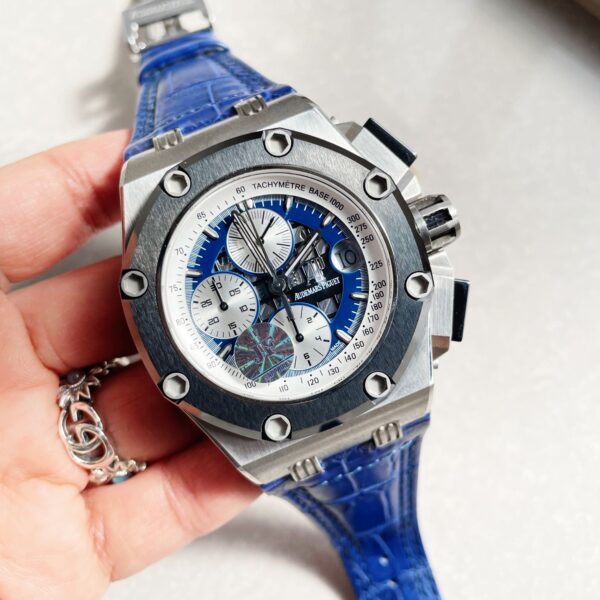
Royal Oak Offshore Rubens Barrichello Ii 26078PO Blue Dial Blue leather Strap
$1,400.00 -
Audemars Piguet
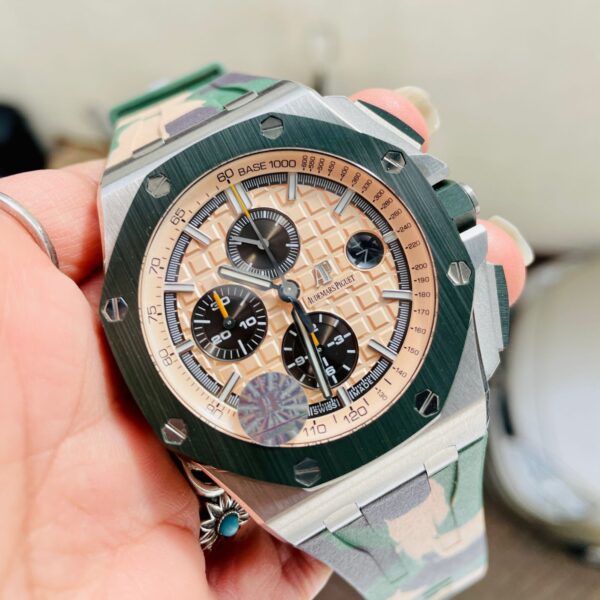
Royal Oak Offshore Chronograph “CAMO” 26400SO Beige colored textured dial Camouflage rubber strap
$1,400.00 -
Audemars Piguet
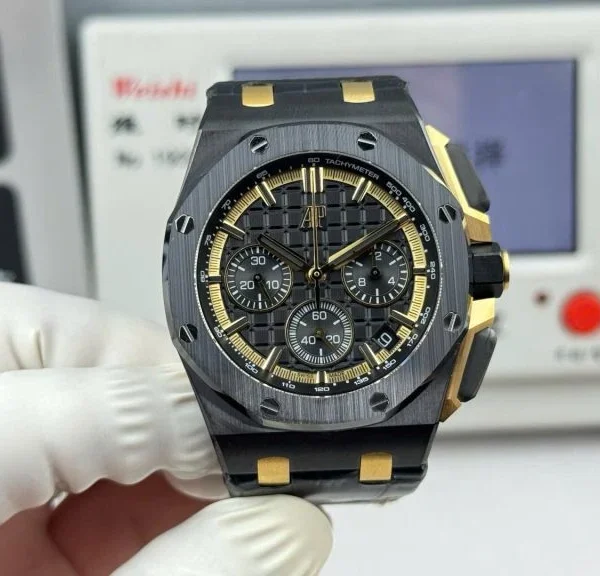
Royal Oak Offshore Chronograph CER Black Dial on Rubber Strap APF A3126 Mod
$1,400.00 -
Audemars Piguet
Royal Oak Offshore Chronograph CER Black Dial on Rubber Strap APF A3126 Mod
$1,400.00 -
Audemars Piguet
Royal Oak Offshore Survivor IPF 1:1 Limited Edition on Red Leather Strap A7750
$1,400.00