No products in the cart.
Official 1:1 Super Clone Category
Royal Oak
Audemars Piguet Royal Oak Super Clone Watches
The Royal Oak is one of those watches that looks simple until you put two versions next to each other.
Octagonal bezel. Eight exposed screws. Tapisserie-style dial. Integrated bracelet.
There really is not that much to hide behind.
That is why a Royal Oak super clone can have a good-looking dial and still feel wrong once you see the complete watch. The bezel might be slightly too thick. The case may sit higher than expected. The brushing can run in the wrong direction. Or the bracelet can look fine in photographs and feel stiff the moment it goes around your wrist.
With a Royal Oak, all those surfaces are connected. The bezel flows into the case, the case flows into the bracelet, and the bracelet is visible from almost every angle.
It is a watch where finishing matters as much as specifications.
If you are comparing factories for the first time, our super clone watch buying guide is a useful starting point before deciding that one factory name automatically makes the best Royal Oak.
Why Royal Oak Replicas Are Hard to Get Right
A Submariner can hide some differences behind a black bezel and relatively conventional case.
The Royal Oak cannot.
The geometry is the design.
Look at the bezel.
Then follow the edge into the case.
Then look at the first bracelet link.
Everything has to transition cleanly.
One badly shaped section can make the whole watch look heavier or softer than it should.
This is also why I would never judge a Royal Oak from one straight-on dial photograph.
The front tells you about the dial and bezel.
The side tells you whether the watch actually looks like a Royal Oak.
Royal Oak 15500 Super Clone Watches
The 15500 is probably one of the references most replica buyers come across first.
It has enough wrist presence to feel modern without moving into the much heavier Royal Oak Offshore territory.
On a 15500-style replica, I would start with proportions.
Look at the bezel relative to the dial.
Look at the case thickness from the side.
Then look at the bracelet where it meets the case.
A watch can have a very convincing blue dial and still feel slightly bulky if the case profile is wrong.
The date deserves attention too, but I would not let one date numeral determine the entire QC decision.
Look at the whole watch first.
Royal Oak 15510 Super Clone Watches
The 15510 looks familiar enough that it is easy to assume it is basically the same watch with a different reference number.
That is where replica shopping gets messy.
Closely related references can still have different dial details, proportions, markers and movement configurations.
If you are buying a 15510-style watch, make sure you are actually comparing it against the 15510 rather than a generic photo of another 41mm Royal Oak.
This sounds obvious.
It happens constantly.
Product listings get copied, factory pictures get reused and buyers end up comparing details from two different references without realizing it.
Royal Oak 15400
The 15400 still makes sense for buyers who prefer that generation of the Royal Oak.
The basic idea is the same: large three-hand Royal Oak, date at three and integrated bracelet.
But this is exactly why reference-specific comparison matters.
Once two watches look broadly similar, the smaller details start doing more of the work.
Marker shape.
Dial layout.
Date position.
Case profile.
Movement appearance through the back.
I would choose between 15400, 15500 and 15510 based on the actual reference you prefer rather than automatically assuming the newest number is the best choice.
Royal Oak Jumbo 15202 and 16202
The Jumbo side of the Royal Oak is different.
Thinner watches are less forgiving.
If a replica case is noticeably too thick, you lose one of the main things that gives the watch its character.
This is why diameter alone is almost useless when comparing a Jumbo-style Royal Oak.
Two watches can measure similarly across the bezel and wear completely differently because of thickness, bracelet construction and how the case sits against the wrist.
Side photographs matter here.
A lot.
I would rather see one clear side profile than ten close-ups of dial text.
The Royal Oak Bezel
This is probably the first thing people inspect.
Eight screws sitting around an octagonal bezel give you plenty of obvious reference points.
Do they look evenly positioned?
Does the bezel appear symmetrical?
Does the finishing look sharp?
Those are useful questions.
What I would not do is spend forty minutes measuring the angle of every screw slot in a photograph.
Photography introduces perspective.
The watch can also be tilted slightly without you realizing it.
Look for something visibly wrong.
Do not create a problem because you feel obligated to find one.
Brushing Makes or Breaks a Royal Oak
This might be the most important section on the page.
The Royal Oak uses finishing as part of the design.
Large brushed surfaces sit directly beside polished edges. The contrast between them creates much of the shape you see when the watch moves.
If the brushing is too coarse, the watch looks cheap.
If everything is polished, it loses definition.
If polished bevels are too wide, the shape starts changing.
This is difficult to judge from factory photos because lighting can make average finishing look spectacular.
QC video is much more revealing.
Rotate the watch.
Watch the light move across the bezel and bracelet.
That tells you much more than a perfectly exposed still photograph.
The Bracelet Is Not Just a Bracelet on a Royal Oak
On most watches, you can mentally separate the bracelet from the watch head.
Not really here.
The Royal Oak was designed around an integrated bracelet, so the transition from case to bracelet is part of the silhouette.
That means the first few links matter enormously.
They need to articulate naturally without creating a strange gap or making the watch sit like a solid block on the wrist.
Then there is finishing.
Each link creates another brushed surface, another polished edge and another opportunity for poor manufacturing to show itself.
This is one reason I would spend almost as much time looking at the bracelet as the dial.
Our bracelet quality guide goes deeper into why this becomes much more obvious after the watch arrives.
Tapisserie-Style Royal Oak Dials
People call almost any square-pattern AP-style dial “tapisserie,” but the pattern deserves more attention than that.
The size of the squares matters.
The depth matters.
The way light falls between raised and recessed sections matters.
A poor dial often looks like a flat printed grid.
A better one has actual visual depth.
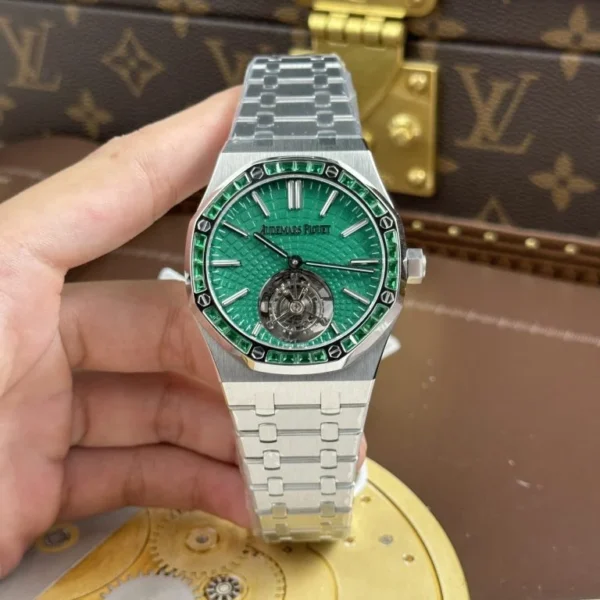
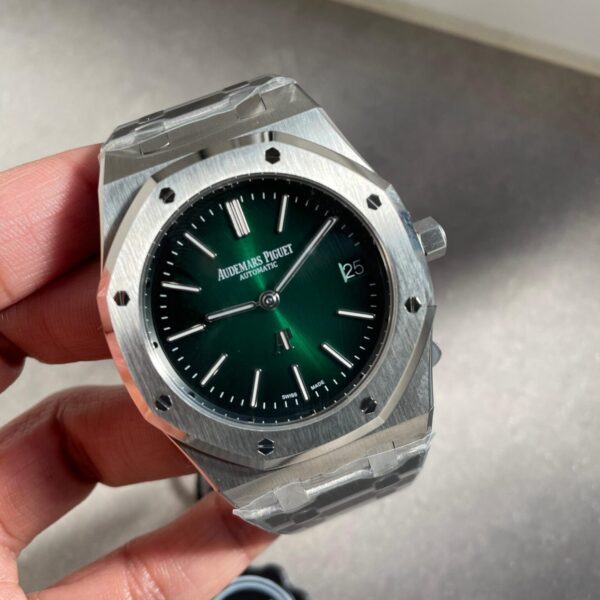
This is particularly noticeable on blue and green dials because changing light affects both the color and texture at the same time.
Again, video.
A product photograph can make almost any textured dial look impressive.
Movement under light is harder to fake.
Blue Royal Oak Dials
Blue gets most of the attention.
It also creates the most arguments.
The problem is photography.
A blue dial can look navy in one room, bright blue near a window and almost gray under certain artificial lights.
Then somebody compares those images against a genuine watch photographed under completely different conditions.
Not especially useful.
I would concentrate on whether the dial has depth and whether the color changes naturally as the watch moves.
One exact screenshot tells you very little.
Green, Black and Gray Royal Oak Dials
The other dial colors can actually be easier to live with.
Green has become increasingly popular across Royal Oak-style watches and gives the watch much more personality.
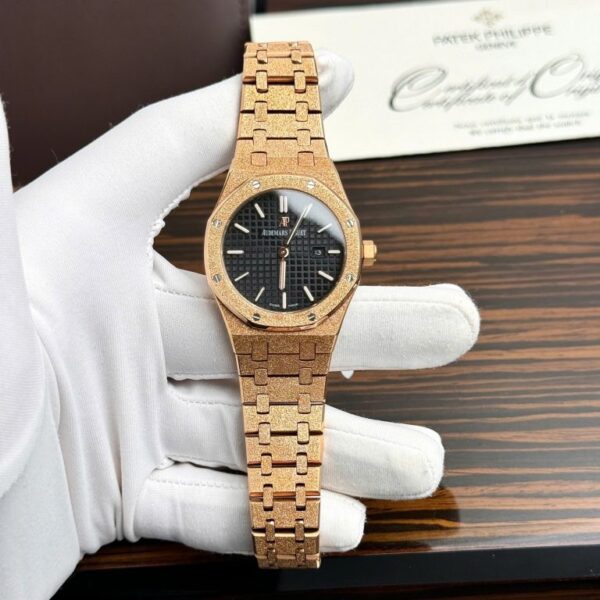
Black is simpler.
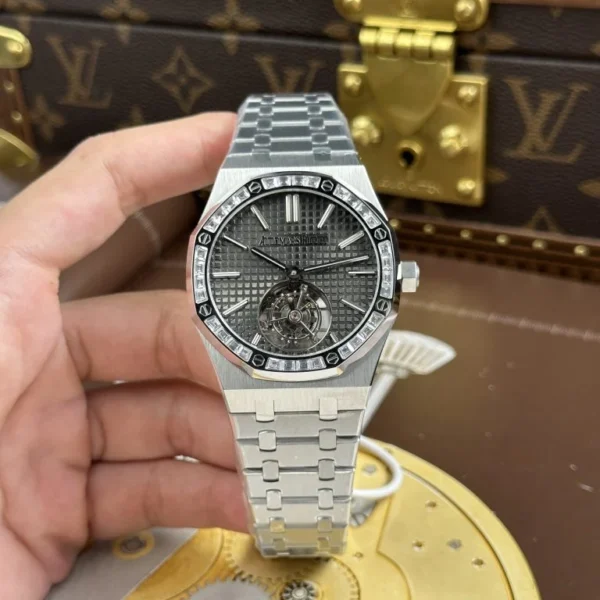
Gray works extremely well with brushed steel because the whole watch becomes more about finishing than contrast.
There is no technically correct color to buy.
Choose the one you still want to look at after the novelty wears off.
Royal Oak Date Window
The date is not the most exciting part of the Royal Oak.
That is probably why it can become annoying when it is wrong.
There is nothing distracting you from it.
Look at more than one date where possible.
Single digits sit differently from double digits.
You are looking for a date wheel that appears reasonably consistent rather than one perfect number.
If 8 looks good and 28 is obviously pressed against one edge, that tells you more than inspecting only 8.
Case Thickness Matters More Than Diameter
This is something Royal Oak buyers should pay more attention to.
Everyone asks how many millimeters across the watch is.
Far fewer ask how thick it is.
But Royal Oak proportions depend heavily on the side profile.
A watch can have the right diameter and still feel completely different if the middle case, bezel or caseback adds too much height.
You notice that when the watch sits on the wrist.
This becomes even more important on Jumbo-style references, but I would check it on any Royal Oak.
AP Clone Movements
Movement matters in two different ways on a Royal Oak.
First, there is operation.
How does winding feel?
Does time-setting engage normally?
Does the date change correctly?
Does the movement keep reasonable time?
Then there is appearance.
Many Royal Oak models use transparent casebacks, which means you can actually see the movement.
That makes movement architecture and finishing more relevant than they would be on a watch with a completely closed back.
I would still prioritize reliability over decorative accuracy.
You spend far more time wearing the watch than staring through the caseback with a loupe.
APSF vs ZF Royal Oak
This is the Royal Oak version of VSF versus Clean.
Eventually almost every buyer ends up comparing factory names.
APSF and ZF are two names that come up often when looking at higher-end Royal Oak replicas.
I would not treat either as an automatic winner.
The answer can change depending on the reference.
One production may have a dial you prefer.
Another might handle thickness or bracelet finishing differently.
Movements change too.
And factory revisions mean an old comparison does not necessarily describe the watch being produced now.
Choose the reference first.
Then compare the current factory versions of that reference.
That order makes much more sense.
Royal Oak Chronograph Super Clones
The chronograph adds another layer of difficulty.
Now the dial has multiple subdials, additional hands and pushers on the side of the case.
That means movement architecture starts influencing what you see from the front.
Look at subdial spacing.
Look at the position of the date where applicable.
Then actually operate the chronograph.
Start it.
Stop it.
Reset it.
A beautiful dial does not make up for a chronograph that behaves badly.
The pushers also change the case profile, so side photographs become even more important.
Royal Oak Perpetual Calendar Replicas
Perpetual Calendar-style Royal Oaks look spectacular because there is so much happening on the dial.
They also require realistic expectations.
A complicated appearance does not automatically mean every complication works exactly like the genuine mechanism.
Find out what the replica movement actually does.
Which indications are functional?
How are they adjusted?
What happens at the end of the month?
Those questions are much more useful than simply reading “perpetual calendar” in the title.
Buy the watch because you like the appearance and understand its actual functions.
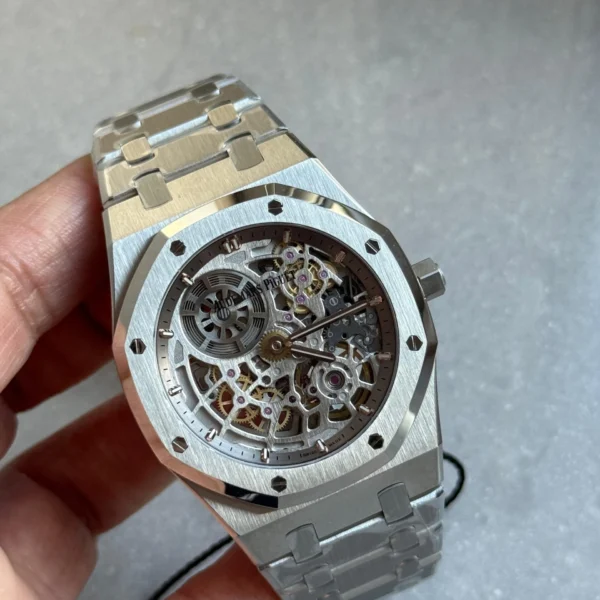
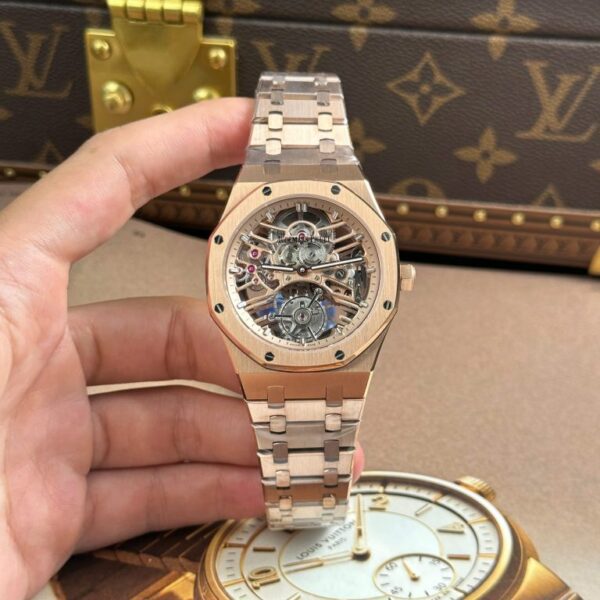
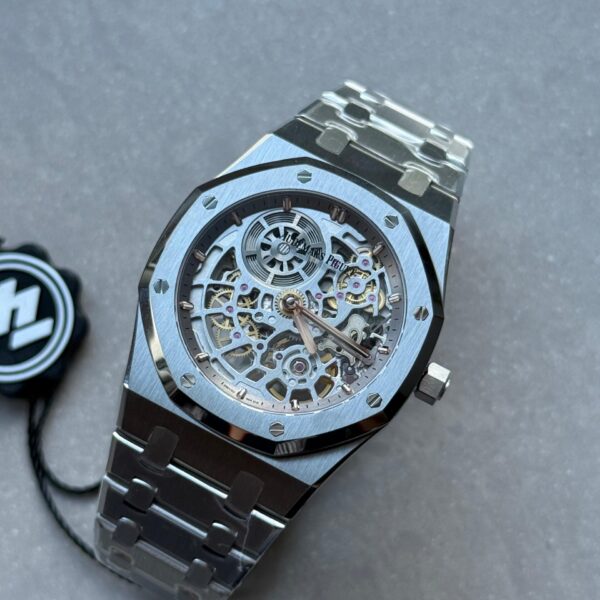
Skeleton and Openworked Royal Oak Watches
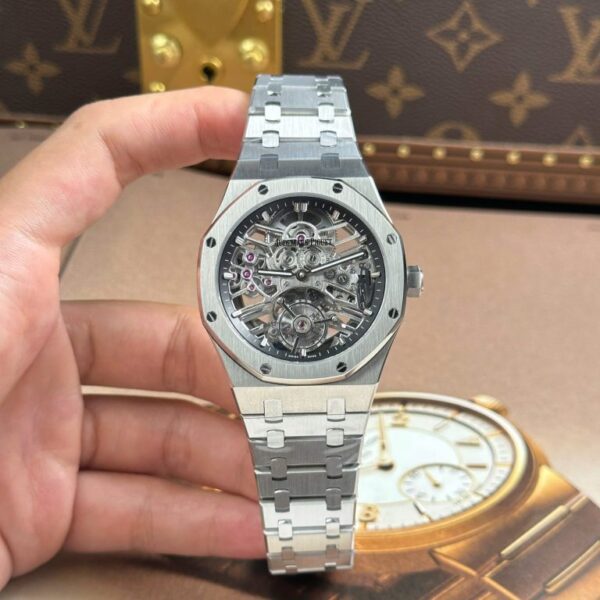
Openworked watches are impressive because you can see so much.
They are also unforgiving.
A conventional dial hides most of the movement.
An openworked Royal Oak puts bridges, wheels and gears directly in front of you.
This is where depth becomes important.
A good skeleton-style watch should look layered.
If everything appears flat and decorative, the effect disappears quickly once you view it from an angle.
Do not judge these from one straight-on photograph.
Ceramic Royal Oak Super Clones
Ceramic changes the Royal Oak completely.
The basic shape stays recognizable, but the finishing behaves differently from steel.
Look at the edges.
Look at how brushed and polished surfaces are separated.
Look at the color under normal lighting.
Black ceramic hides some visual imperfections.
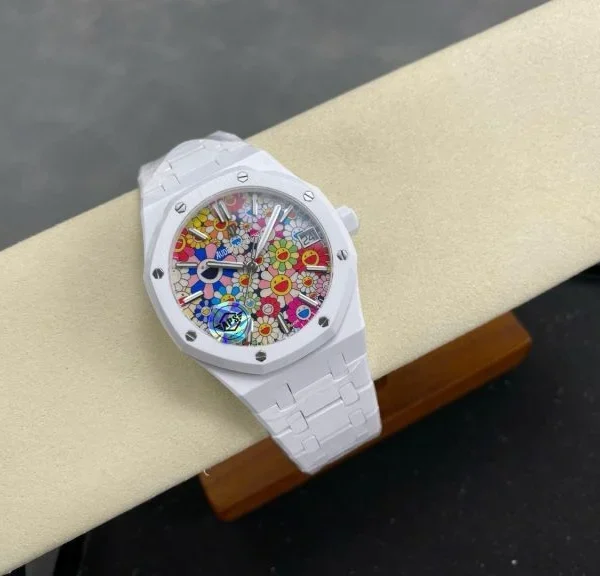
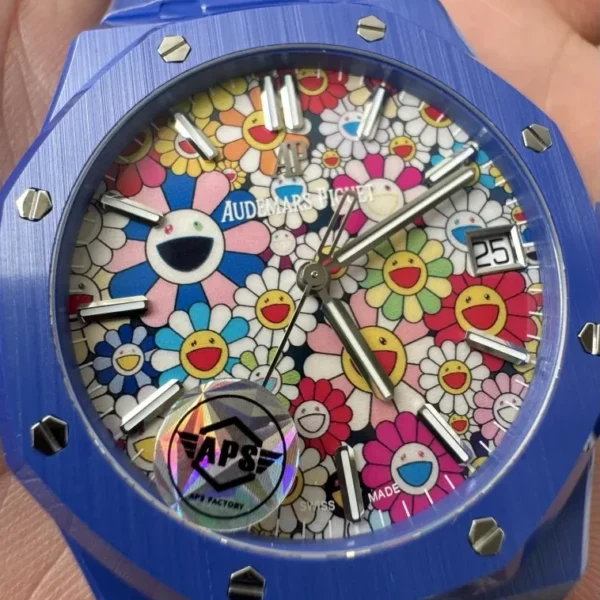
Blue, white and brighter ceramic colors are less forgiving.
If the color is unusual, QC video becomes especially important.
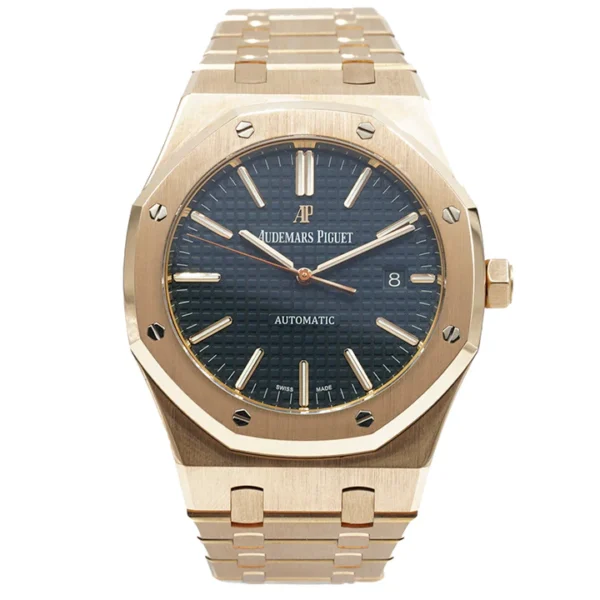
Rose Gold and Yellow-Gold Royal Oak Replicas
Gold-tone Royal Oaks add color consistency to the QC list.
Compare the bezel, case and bracelet under the same lighting.
They should look as though they belong together.
If one section is noticeably warmer or more yellow than another, the integrated design makes that easier to notice than it might be on a watch with a leather strap.
The bracelet uses so much metal that its color dominates the entire watch.
That is another reason bracelet quality matters so much here.
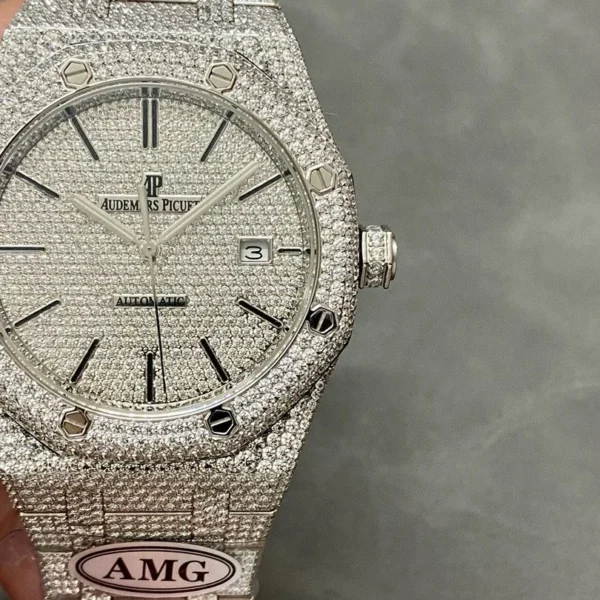
Diamond and Moissanite Royal Oak Watches
Stone-set Royal Oaks are a different category in practice.
Inspect the watch first.
Then inspect the stones.
Do not let sparkle distract from a crooked dial, poor bracelet or movement problem.
Once the base watch looks right, check the setting.
Look for even rows.
Consistent spacing.
Similar stone height.
Clean edges.
Bright lights make everything sparkle.
Alignment is harder to hide.
What We Check During Royal Oak QC
I would start with the complete watch.
Do not zoom in yet.
Does the bezel look balanced?
Does the dial appear straight?
Does the bracelet sit naturally?
Then move closer.
Check bezel screws, markers, hands and date alignment.
Look at the case from the side.
Inspect the first bracelet links carefully.
Check the clasp.
Operate the crown and date.
On chronographs, test the pushers and reset.
Then look at the finishing under movement rather than just still photos.
If you are reviewing the watch yourself, our guide to reading QC photos before approval gives you a practical order for inspecting the watch without turning every tiny photographic difference into a problem.
Do Not QC a Royal Oak From the Dial Alone
This is probably the biggest mistake.
The dial photographs well.
Especially blue ones.
People zoom into the tapisserie pattern, inspect the AP logo and study marker alignment.
Meanwhile, the bracelet is barely visible at the bottom of the picture.
On a Royal Oak, I would almost reverse that priority.
Dial.
Yes.
But also bezel shape, case thickness, brushing and bracelet articulation.
Those things determine how the complete watch feels.
A fantastic dial sitting inside a badly proportioned case is still a badly proportioned watch.
Which Royal Oak Super Clone Should You Choose?
Start with the reference.
If you want the larger modern three-hand look, compare the 15400, 15500 and 15510 generations.
If thin proportions are the reason you like the Royal Oak, look toward the Jumbo-style references.
If you want more mechanical activity on the dial, look at the chronographs.
Perpetual Calendar and openworked designs take things much further but also create more areas where replica construction can differ from the genuine mechanism.
Then choose the material.
Steel is the easiest place to start.
Ceramic changes the appearance and feel considerably.
Gold-tone models become much more about color and bracelet finishing.
After that, compare factory and movement.
Not before.
Explore Audemars Piguet Royal Oak Super Clone Watches
Browse the Royal Oak collection to compare 15400, 15500, 15510, Jumbo, chronograph, ceramic, gold-tone and other configurations across different factories, movements and dial colors.
For broader comparisons covering movements, factories and watch construction, visit our watch guides and factory reviews.
The Royal Oak is not a watch where one perfect dial can carry everything else.
The case matters.
The bezel matters.
The brushing matters.
And the bracelet probably matters more than most first-time buyers expect.
When those things work together, the watch looks simple again.
That is usually a good sign.
Important: Watches offered by SuperCloneReps are independent reproductions. They are not manufactured, sponsored, approved or endorsed by Audemars Piguet and should never be represented or resold as authentic Audemars Piguet watches.
-
 Audemars Piguet
Royal Oak Openworked 16204 SS ZF 1:1 Best Edition Skeleton Dial on SS Bracelet A7124 Super Clone
$1,400.00 -
-
Audemars Piguet
Audemars Piguet Royal Oak 41mm 15510 RG DDF 1:1 Best Edition Black Textured Dial Super Clone
$1,200.00 -
-
-
Audemars Piguet
Audemars Piguet Royal Oak Selfwinding Flying Tourbillon 26730BC Gray Dial 41mm Super Clone
$1,200.00 -

-
-
-
-
-
-
Audemars Piguet
Audemars Piguet Royal Oak Openworked Yellow 15407 Skeleton Dial THB Factory 41mm
$1,500.00 -
Audemars Piguet
Audemars Piguet Royal Oak 15416 Skeleton Dial Black Ceramic THB Factory 41mm Super Clone
$1,500.00 -
Audemars Piguet
Royal Oak Openworked 16204 SS ZF 1:1 Best Edition Skeleton Dial on SS Bracelet A7124
$1,400.00 -
Audemars Piguet
Audemars Piguet Royal Oak Openworked Frosted 15412 Skeleton Dial Bezel Stone Baguette 41mm
$1,500.00