No products in the cart.
Official 1:1 Super Clone Category
Patek Philippe
Patek Philippe replicas are a little different from most watches in this category. There is usually less to hide behind. A simple dial, thin case and clean bracelet can actually make small mistakes easier to notice.
Our Patek Philippe super clone collection covers Nautilus, Aquanaut, Calatrava, Complications and other references across several factories and movement configurations. Names such as 3KF, PPF, ZF and GR regularly appear when comparing different versions, but the factory name alone does not tell you whether a particular watch is the right one to buy.
Start with the collection and reference you actually like. Then compare the case, dial, bracelet or strap, movement and the individual watch shown during QC. If this is your first time buying, our super clone watch buying guide covers the overall process in more detail.
Shop Patek Philippe Watches by Collection
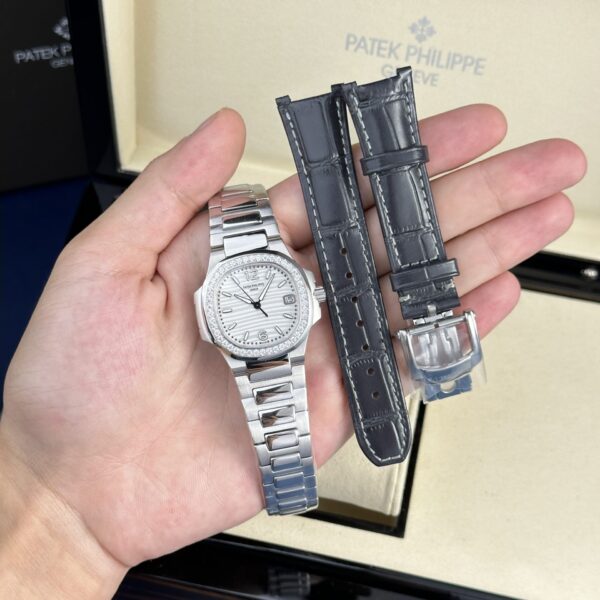
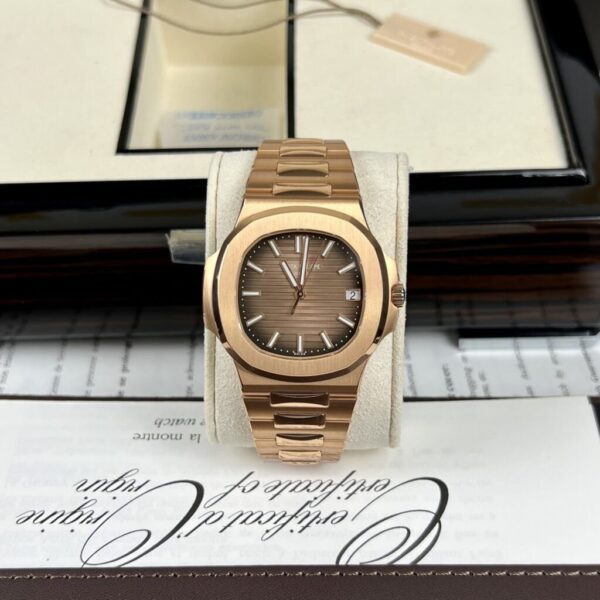
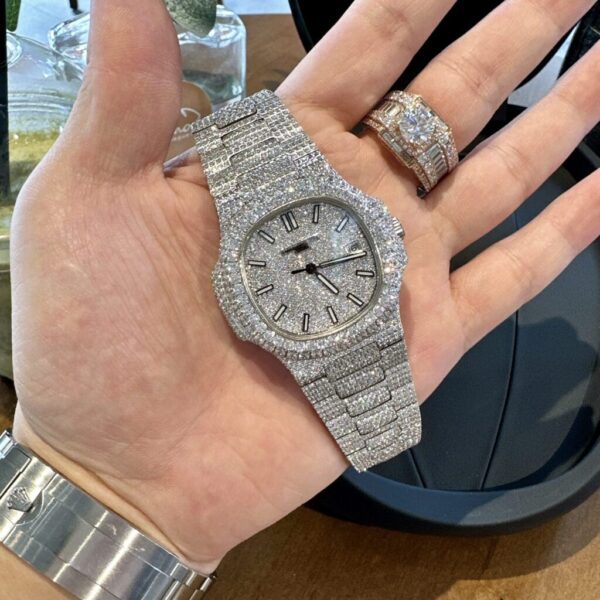
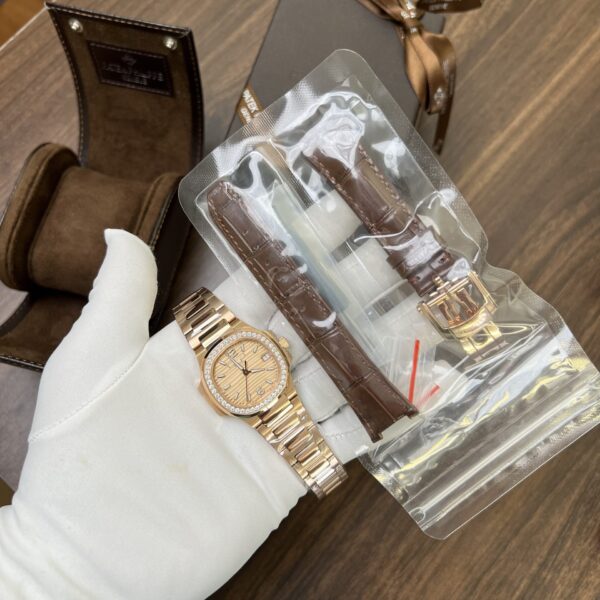
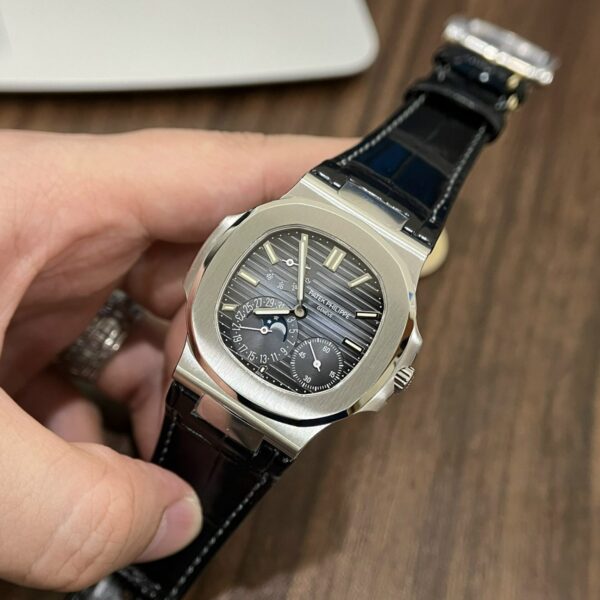
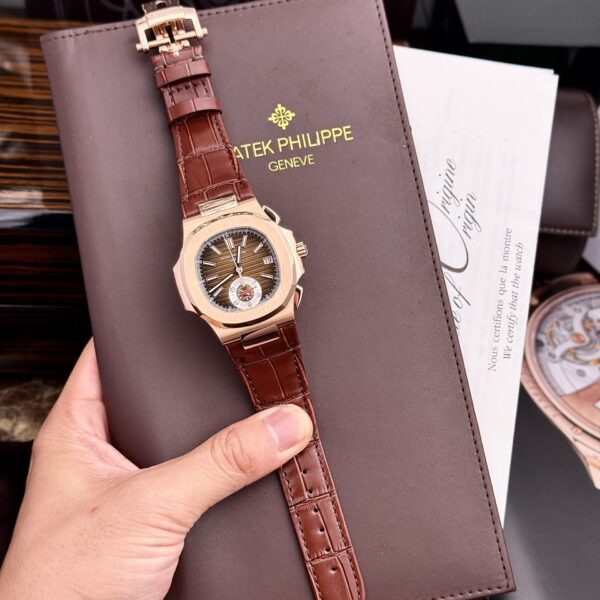
The Patek Philippe Nautilus collection is the largest part of our Patek catalog and includes references such as the 5711, 5712 and other sport models across steel, rose-gold and custom configurations.
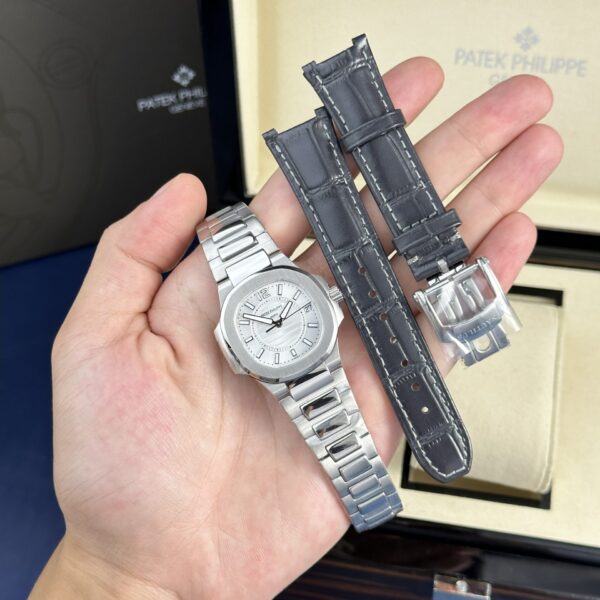
The Aquanaut collection takes a more casual approach, usually pairing a rounded-octagonal case with a rubber strap. Popular references include the 5167 and larger 5168 variations.
For something more traditional, browse the Patek Philippe Calatrava collection. These watches are much simpler visually, which means case shape, dial spacing and overall thickness become especially important.
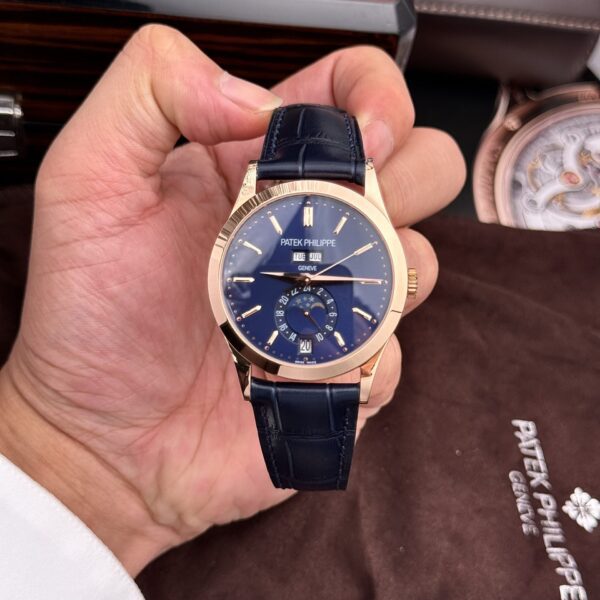
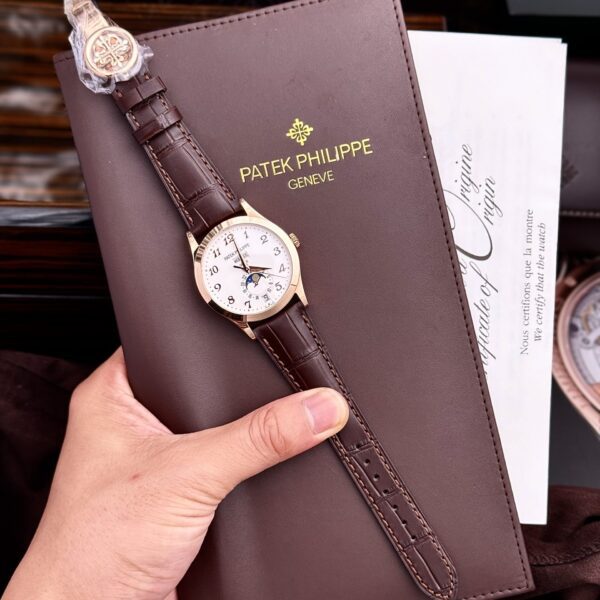
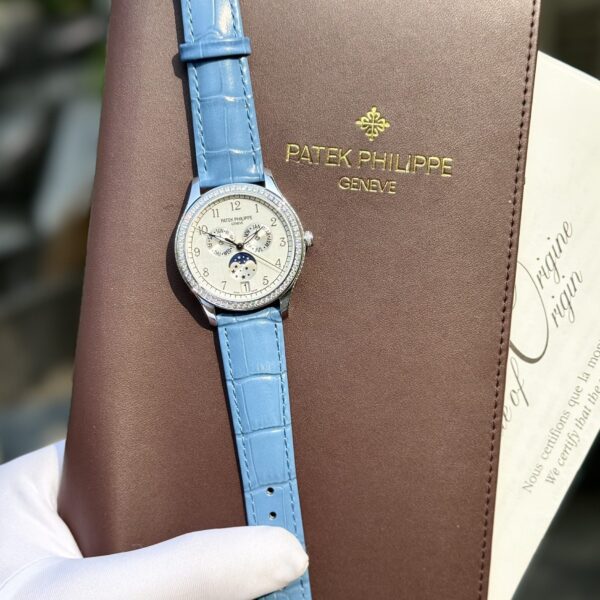
More complicated layouts can be found in our Patek Philippe Complications and Grand Complications collections.
How to Compare Patek Philippe Super Clone Watches
Most people looking at a Patek for the first time start with the dial.
That is understandable.
With these watches, though, proportions often matter just as much.
A Nautilus with a beautiful dial can still feel wrong if the case is too thick. A Calatrava can have clean printing and still lose the character of the original design if it sits too high on the wrist. An Aquanaut can photograph well while the strap-to-case fit looks awkward from the side.
Patek is one of those brands where the watch needs to work as a whole.
There is rarely one giant detail that ruins it. Usually it is a collection of smaller things.
Case Thickness Matters More on Patek
People sometimes judge replicas almost entirely from a straight-on photograph.
That works better for some watches than others.
With many Patek references, the side profile tells a much bigger part of the story.
Look at how thick the mid-case appears. Look at the bezel. Look at the caseback. Then look at how all three come together.
A watch that appears thin and elegant from the front can look considerably heavier once photographed from the side.
This is especially worth checking on Nautilus and Calatrava models.
That does not mean chasing fractions of a millimeter from photographs. Measurements online are useful, but QC is not a laboratory exercise. What you are really looking for is whether the proportions make sense for that specific reference.
Ask for a side view when you need one.
It can save a lot of guessing.
The Nautilus Is Mostly About Proportion
The Nautilus looks simple until you start comparing versions.
Then things get interesting.
The shape of the bezel matters. The width of the case ears matters. The way the bracelet leaves the case matters. The thickness matters.
Even the horizontal dial texture can change the character of the watch if it is too deep, too flat or spaced differently.
None of those details is particularly dramatic by itself.
Together, they make the watch.
Patek Philippe Nautilus 5711
The 5711 is probably the easiest place to understand why Patek replicas are difficult.
There is not much going on.
Three hands. A date. A horizontally patterned dial. An integrated bracelet.
That simplicity leaves very little distraction when something looks off.
When comparing a 5711, spend less time asking which version has the most impressive specification sheet and more time looking at:
- case thickness and overall profile
- bezel shape
- dial color and horizontal texture
- marker placement
- date-window position
- hand proportions
- bracelet articulation
- clasp construction
Blue and green dials also change heavily with lighting.
That matters.
A dial can look excellent under bright factory lighting and noticeably different indoors. Try to judge color across more than one QC photograph if possible.
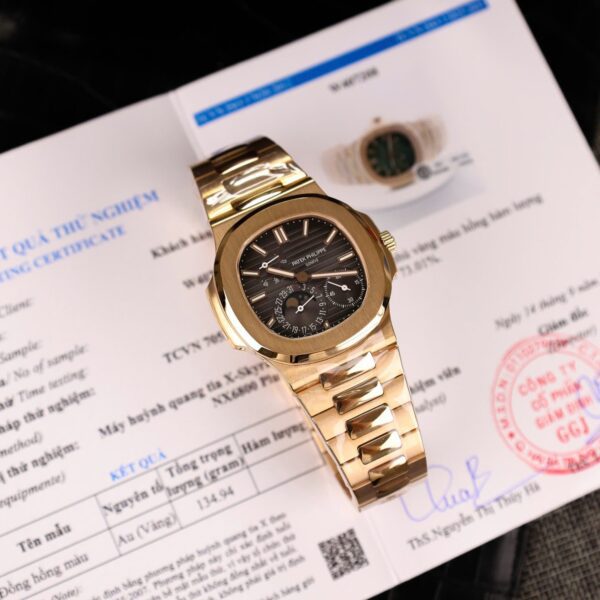
Patek Philippe Nautilus 5712
The 5712 adds considerably more going on across the dial.
That creates more things to compare.
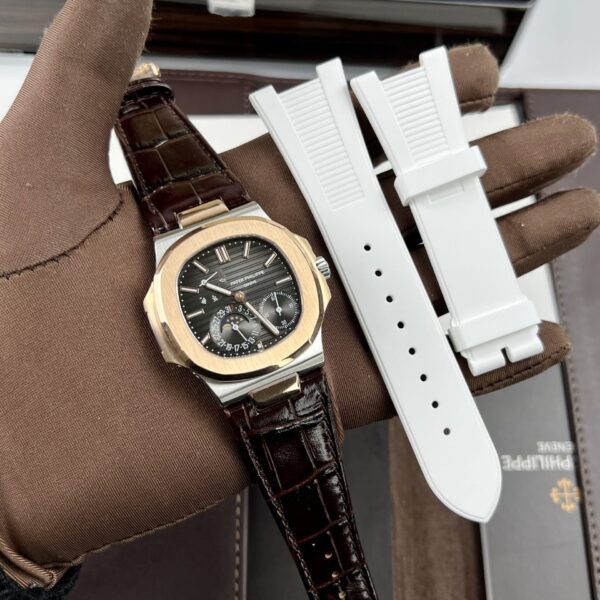
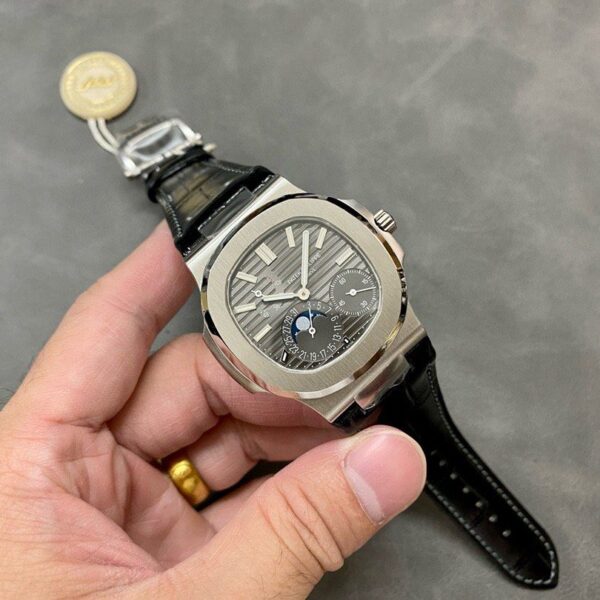
Subdial placement, power-reserve display, moonphase area, date scale and hand positioning all affect the overall balance.
The mistake here is looking at each complication separately.
Take a step back.
Does the entire dial feel balanced?
That question is often more useful than zooming into one marker and deciding whether it sits a fraction too high.
Movement configuration also becomes more relevant with watches like the 5712 because the displayed functions need to correspond properly with the dial layout.
Complexity can make a watch more interesting.
It also gives you more things to check.
Bracelet Quality Is Crucial on a Nautilus
People obsess over Patek dials.
Then the watch arrives and they start talking about the bracelet.
An integrated bracelet is difficult to ignore because it visually begins at the case and continues around the wrist. There is no clear separation between “watch” and “bracelet.”
On a Nautilus, look at how the first links leave the case.
Look at the taper.
Look at the gaps between links.
Look at how freely the bracelet articulates when the watch is held rather than laid flat for a photograph.
Then check the clasp.
A stiff bracelet can make an otherwise good watch feel cheaper immediately.
This is why we put more emphasis on bracelet inspection than many first-time buyers expect. Our guide on why bracelet quality matters explains why this becomes more noticeable after the watch has actually been worn for a while.
Patek Philippe Aquanaut
The Aquanaut is a completely different watch to live with.
It is still unmistakably Patek, but the rubber strap and sportier dial make it feel less formal than a Nautilus or Calatrava.
It can also be a little more forgiving visually.
Not completely forgiving, though.
Look closely at the dial texture, numeral placement, case shape, bezel transition and the way the rubber strap meets the case.
Strap fit matters more than people think.
If there is an awkward gap where the strap meets the case, you will probably notice it every time you look down at the watch.
Aquanaut 5167 vs 5168
The 5167 and 5168 can look similar in isolated product photographs, but they do not necessarily feel the same on the wrist.
Size is an obvious difference.
Wrist presence is the bigger one.
The 5167 generally makes more sense for someone who likes the Aquanaut specifically because it does not feel oversized.
The 5168 has more presence and may appeal to someone who wants the same basic design in a larger format.
Neither is automatically the better choice.
Measure a watch you already own and compare it before ordering. Diameter measurements are useful, but lug shape, thickness and strap angle affect the way a watch actually wears.
Calatrava: Simple Watches Are Not Easy to Replicate
A Calatrava does not give you many places to hide.
No integrated bracelet.
No large rotating bezel.
No aggressive case design.
Sometimes it is little more than a clean dial inside a polished case on leather.
That puts pressure on the details that are there.
Look at dial printing, index placement, hand length, date positioning where applicable and the relationship between the bezel and case.
Thickness matters a lot here too.
A dress watch starts feeling completely different if the case becomes unnecessarily bulky.
This is also one category where I would not become obsessed with weight.
A heavier watch is not automatically a better watch. With many Patek designs, excessive weight can work against the whole point of the reference.
Patek Philippe Complications
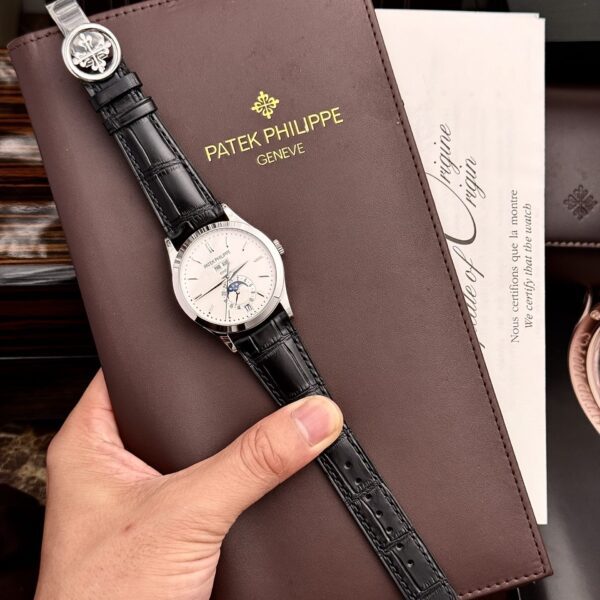
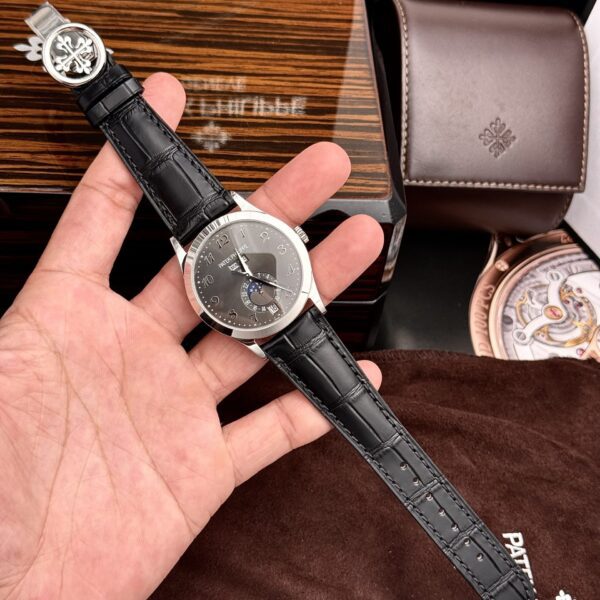
The Complications collection includes watches where calendar displays, moonphases, chronograph functions and other features become a larger part of the design.
This is where buying gets more complicated too.
Literally.
The more functions a watch displays, the more important it becomes to understand what the replica movement actually does.
Do not assume every visual display behaves exactly like the corresponding genuine caliber.
Check the individual model.
Ask what functions are operational.
Ask how they are adjusted.
Then watch those functions during QC if they matter to you.
A complicated dial that looks convincing while completely static is only half the story.
Grand Complications Need More Research Before Buying
The Grand Complications collection contains some of the most visually ambitious Patek designs in the catalog.
They are also the models where expectations need to stay realistic.
A highly complicated genuine Patek caliber can involve mechanical architecture that is not practical to reproduce exactly at replica pricing.
That does not automatically make the replica a poor watch.
It does mean you should understand what you are buying.
Look beyond the dial.
Find out which displays function, how they function and what movement is being used underneath.
The more complicated the genuine watch becomes, the less useful broad phrases such as “1:1 movement” become without an explanation of what that actually means for the individual reference.
3KF, PPF, ZF, GR and Other Factory Names
Factory discussions around Patek can become confusing quickly.
One person tells you to buy 3KF.
Another swears by PPF.
Some references appear from ZF, GR and other factories as well.
The problem starts when buyers try to turn those names into a universal ranking.
That does not work very well.
A factory can produce an excellent version of one reference and a less convincing version of another. Factories also update products, change movements and revise dials or cases.
So instead of asking:
“Which Patek factory is best?”
ask:
“Which version is strongest for this specific reference?”
That is a much more useful question.
Factory reputation should narrow your search.
It should not make the decision for you.
Movement Choice Matters More Once You Own the Watch
A movement is easy to ignore when you are browsing photos.
Six months later, it can become one of the things you notice most.
You interact with it every time you wind the watch, set the time or change the date.
That is why movement discussions should go beyond whether the rotor or bridges look similar through a display back.
Look at operation too.
Does the crown feel smooth?
Does winding feel normal?
Are the complications functioning properly?
Is the movement running consistently?
Can it reasonably be serviced if something eventually goes wrong?
A visually ambitious movement is not automatically the most practical movement to own.
If this is something you are researching, our clone movement vs Swiss ETA guide goes deeper into movement architecture, ownership and serviceability.
Check the Actual Watch, Not Just the Listing
Product photographs tell you what a model is supposed to look like.
QC photographs tell you what your watch looks like.
There is a difference.
Two pieces from the same factory and batch can still have small variations in marker alignment, date position, exterior finishing or bracelet condition.
That is why QC should focus on the actual piece allocated to the order.
For Patek models, useful areas to check include:
- overall balance
- dial and marker alignment
- date position
- case condition
- case thickness and profile
- bracelet or strap fit
- clasp operation
- crown operation
- movement functions
- visible scratches or damage
Our guide to reading QC photos explains the process in more detail.
The main lesson is simple: do not start at 500% zoom.
Look at the entire watch first.
If something feels obviously wrong, investigate it. If you need extreme magnification to convince yourself there is a problem, think about whether you would ever notice it during normal wear.
Do Not Assume Water Resistance
Water resistance should be treated as something to test on the individual watch, not something inherited from the specifications of the genuine Patek reference.
Seals, crown construction, assembly and caseback fit all matter.
If water resistance is important, the individual watch should be pressure tested.
And even then, mechanical watches need sensible treatment.
Seals age. Cases get opened. Watches get serviced.
Water resistance is a condition of the watch at a point in time, not a lifetime promise.
Which Patek Philippe Super Clone Should You Choose?
Start with the kind of watch you actually want to wear.
If you want the classic integrated-bracelet Patek look, start with the Nautilus collection.
If you prefer something sportier and less formal, look at the Aquanaut.
If you want a traditional dress watch, the Calatrava makes more sense.
If the mechanics and dial layout are part of the attraction, explore the Complications collections—but spend more time researching how the individual movement works before ordering.
Once you have chosen the reference, compare:
- factory and current version
- case dimensions
- dial execution
- movement
- bracelet or strap
- functions
- QC of the actual piece
That sequence usually gets you further than searching for a single list of “best Patek super clones.”
Final Thoughts on Patek Philippe Super Clone Watches
Patek replicas are not necessarily difficult because they have more going on.
Quite often, the opposite is true.
The simpler models expose everything.
A Nautilus bracelet either flows naturally or it does not. A Calatrava case either has the right kind of profile or it feels too heavy. An Aquanaut strap either integrates cleanly with the case or the gap starts bothering you every time you look at it.
None of these watches is perfect, and no replica should be represented as a genuine Patek Philippe.
The useful approach is to compare the details that affect the actual watch: proportions, dial execution, movement, bracelet or strap, and the individual piece shown during QC.
For more research before choosing a model, browse our watch guides and factory reviews, including articles covering QC, movements, bracelets and the details that become more noticeable after the watch has been worn for a while.
-

-

-

-

-

-

-

-

-

-

-
 Complications
Patek Philippe Super Clone Watch Complications 5396G White Dial Leather Strap 38.5mm
$1,500.00 -
 Complications
Patek Philippe Super Clone Watch Complications 5396G Gray Dial GR Factory 38.5mm
$1,500.00 -
 Complications
Patek Philippe Super Clone Watch Complications 5396R Blue Dial GR Factory 38.5mm
$1,500.00 -
 Complications
Patek Philippe Super Clone Watches Complications 5396R White Dial Leather Strap 38.5mm
$1,500.00 -

-