No products in the cart.
Official 1:1 Super Clone Category
DateJust
Rolex Datejust Super Clone Watches
The Datejust looks easy until you start comparing them.
There is no rotating dive bezel to distract you. No chronograph registers. No GMT hand. On most versions you are basically looking at a dial, date window, bezel and bracelet.
That simplicity is exactly why a good Datejust super clone is harder to get right than people expect.
When something is slightly off, there is nowhere for it to hide.
The shape of the fluted bezel matters. The date needs to sit naturally beneath the Cyclops. A blue or green dial needs to react properly when the light changes. Then there is the bracelet, which usually gets about ten seconds of attention while shopping and becomes one of the things you notice most once the watch is actually on your wrist.
Our Datejust collection includes 28mm, 31mm, 36mm and 41mm configurations with Oyster and Jubilee-style bracelets, smooth and fluted bezels, traditional dials, Wimbledon configurations and more customized diamond and moissanite versions.
If this is your first replica, our super clone watch buying guide is worth reading before choosing a Datejust simply because a particular factory name is popular.
Why the Datejust Is So Easy to Get Almost Right
Almost right is the problem.
A Datejust can have a good case, convincing dial and decent movement and still leave you staring at one thing every time you check the time.
Maybe the date sits too high.
Maybe the bezel catches light differently.
Maybe the Jubilee bracelet feels loose.
Maybe the blue dial photographs beautifully but looks flat once you take it outside.
None of those things necessarily sounds dramatic on a specification sheet. Put several of them together and the whole watch changes.
That is why we prefer judging the Datejust as a complete watch instead of chasing one supposedly perfect component.
Datejust 36mm Super Clone Watches
If I had to pick the size that feels most closely associated with the Datejust, it would be 36mm.
It works because the proportions are restrained. The dial is large enough to read clearly without taking over the wrist, and the fluted bezel has enough presence without becoming the first thing you see from across the room.
It also means proportion mistakes become fairly obvious.
If the bezel is too heavy, the dial starts looking small. If the case is unnecessarily thick, the watch loses some of the neatness that makes a 36mm Datejust attractive in the first place.
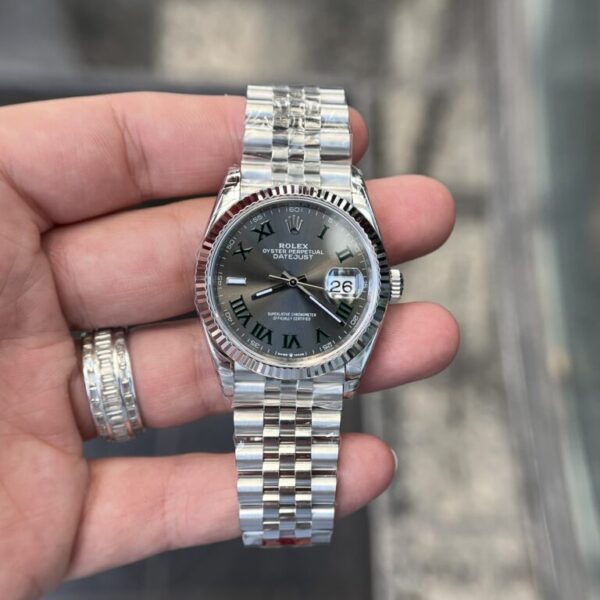
One version worth comparing is the Datejust 126234 Wimbledon Dial VS Factory 36mm. The Wimbledon configuration is particularly useful for comparison because those green Roman numerals immediately draw the eye toward the dial.
Datejust 41mm Super Clone Watches
The 41mm changes the personality of the watch more than the four or five millimeters on paper might suggest.
There is more dial. More bezel. More bracelet presence. It simply looks more modern and substantial on the wrist.
That makes the 41mm popular with buyers who like the Datejust design but find the traditional proportions a little too quiet.
I would pay particular attention to the relationship between the bezel and dial on a 41mm version. A fluted bezel that is too pronounced can make an already larger watch feel even bigger.
Bracelet balance matters too. The watch head should not feel as if it is sitting on top of a bracelet that is too light or loose for it.
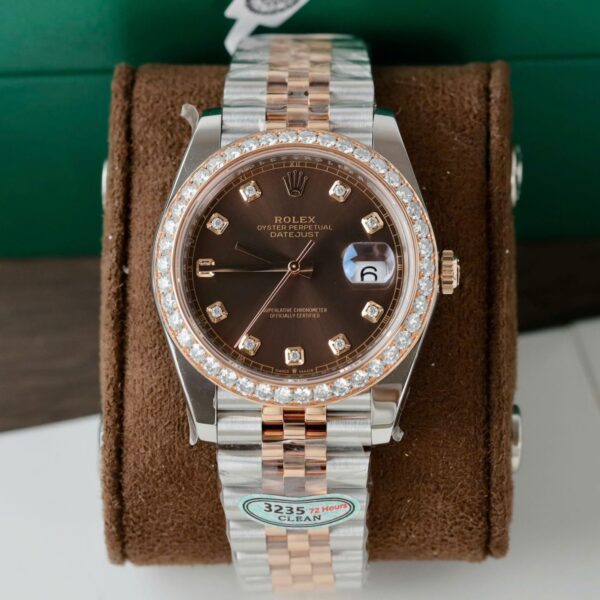
Your current collection includes configurations such as the Datejust Chocolate Dial Clean Factory 41mm, along with more traditional steel and two-tone versions.
36mm or 41mm?
This question gets overcomplicated.
Look at your wrist and look at the kind of watch you already enjoy wearing.
If you want a Datejust that feels classic and sits relatively quietly, 36mm is usually the direction I would look.
If you want more wrist presence and a larger dial, go 41mm.
I would not choose 41mm simply because men’s watches are supposedly meant to be larger. Likewise, I would not choose 36mm only because somebody tells you it is the historically correct way to wear a Datejust.
You are the one looking at it every day.
Datejust 31mm and 28mm
The smaller Datejust sizes deserve more attention than they usually receive on replica sites.
A 31mm or 28mm watch has less room for error.
Hour markers, date-window placement and bezel proportions are squeezed into a smaller area, so a component that is only slightly oversized can change the balance of the entire dial.
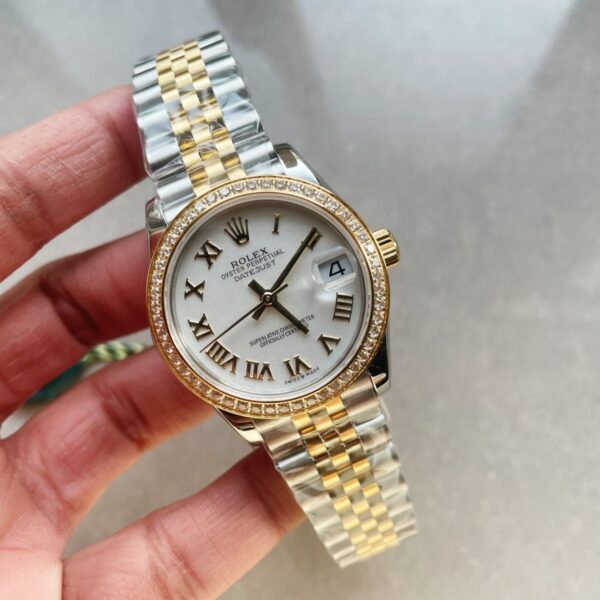
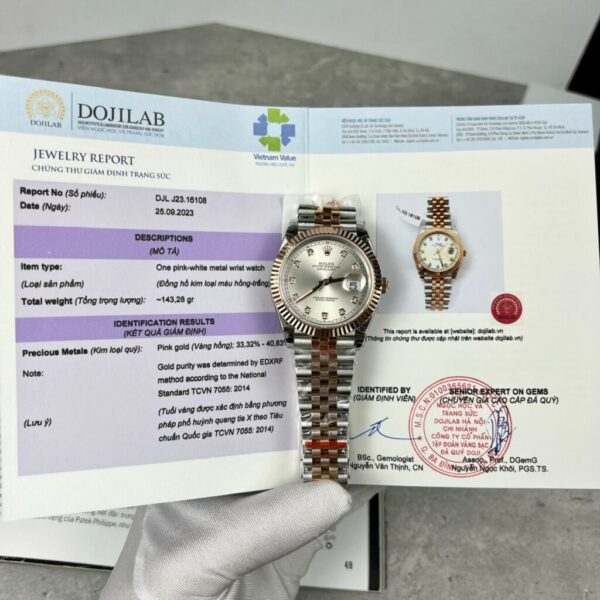
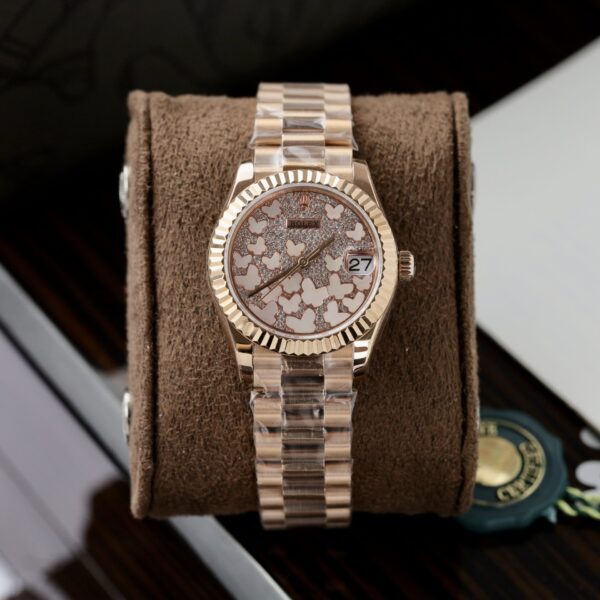
There are also plenty of decorative configurations in these sizes: diamond markers, mother-of-pearl-style dials, two-tone bracelets and stone-set bezels.
With those versions, do not let the stones distract you from the watch underneath them.
Check the dial first.
Then the setting.
Then the bracelet.
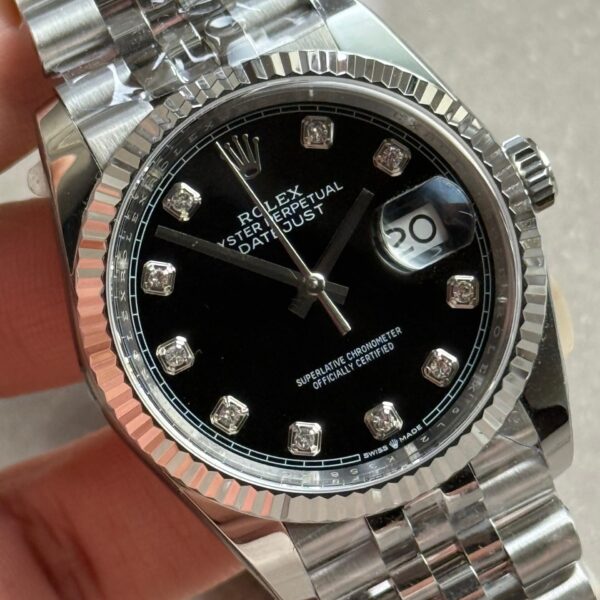
The Datejust Fluted Bezel
The fluted bezel is probably the detail most people associate with the Datejust after the Cyclops.
It also changes constantly under light.
That is the part photographs struggle to show.
A bezel might appear sharp and bright under a photography lamp but look softer in normal indoor light. The individual flutes should have enough definition to create those alternating reflections rather than looking like shallow decorative grooves.
I would check it from several angles.
Not just straight on.
The straight-on photograph tells you whether everything looks symmetrical. An angled video tells you much more about the finishing.
What About Smooth-Bezel Datejust Models?
A smooth bezel makes the watch calmer.
It also removes one of the biggest visual elements from the comparison.
With less happening around the dial, you notice the crystal, dial finishing, markers and case shape more.
Some buyers automatically associate Datejust with a fluted bezel and Jubilee bracelet, but smooth bezel with Oyster can be a very clean combination, especially if you want something that sits somewhere between a Datejust and the simpler Oyster Perpetual look.
Neither is better.
They just emphasize different parts of the watch.
Jubilee vs Oyster Bracelet
This one changes the Datejust completely.
The Jubilee is unmistakable.
It catches more light, feels dressier and gives the watch much more visual texture. It is also one of the components where mediocre construction becomes noticeable quickly.
Too much looseness between the links and the watch starts feeling cheap.
Edges that are not properly finished become annoying after a few hours.
A clasp that feels weak makes you think about it every time you put the watch on.
The Oyster bracelet is simpler and generally gives the Datejust a slightly sportier appearance.
I would choose between them based on the watch you actually want rather than which bracelet someone says is more “correct.”
Either way, spend more time looking at the bracelet than you probably planned to. Our bracelet quality guide explains why it becomes much more important after the watch arrives.
The Date Window Can Make or Break the Watch
Datejust.
The clue is in the name.
You are going to look at that date window constantly.
A slightly imperfect engraving hidden between the lugs might never bother you. A date that looks obviously too high every time you check the watch probably will.
Do not judge the date using a single number.
This is a mistake buyers make all the time.
The number 1 occupies the window differently from 8. Eleven looks different from 23. A good QC set should ideally let you see more than one part of the date wheel.
You are looking for consistency rather than mathematical perfection.
If you want to go deeper into this, read our Date Window Alignment Guide. It explains what is worth worrying about and what often looks strange simply because of the number being displayed.
And Then There Is the Cyclops
A good date can still look strange through a poor Cyclops.
Position matters.
Magnification matters.
So does the crystal underneath it.
This is one reason Datejust buyers eventually start caring about crystal quality more than they expected. The crystal affects the way you see the entire dial, but the Cyclops makes the difference especially obvious around the date.
If that area immediately pulls your attention for the wrong reason, investigate it during QC.
If you have to zoom to 500% before deciding something might be half a millimeter off, that is a different conversation.
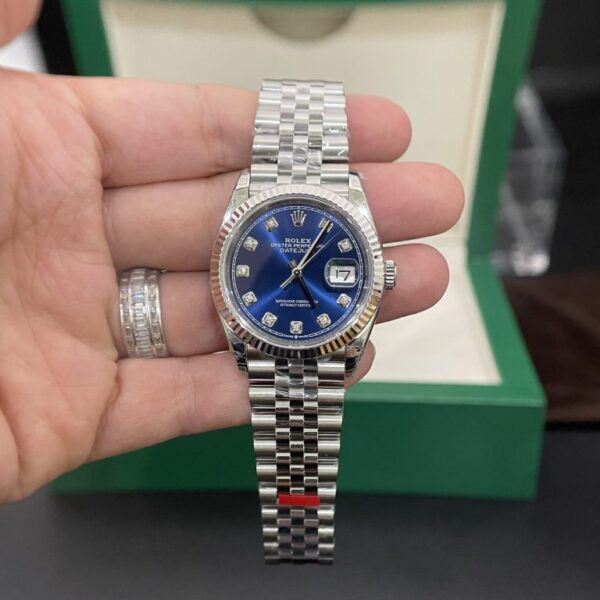
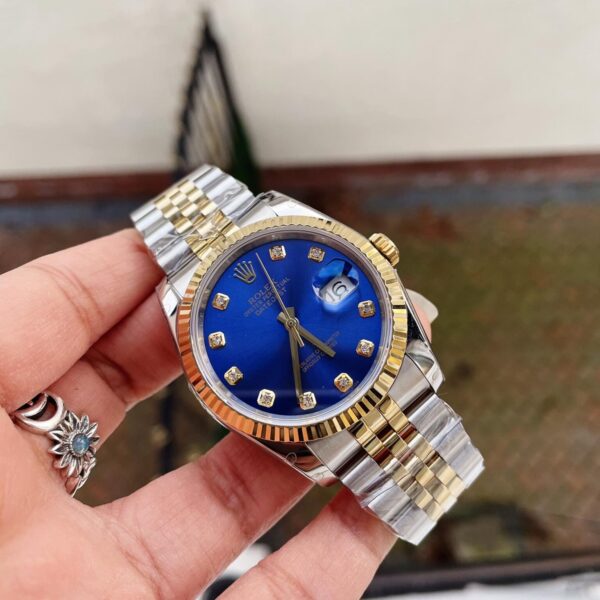
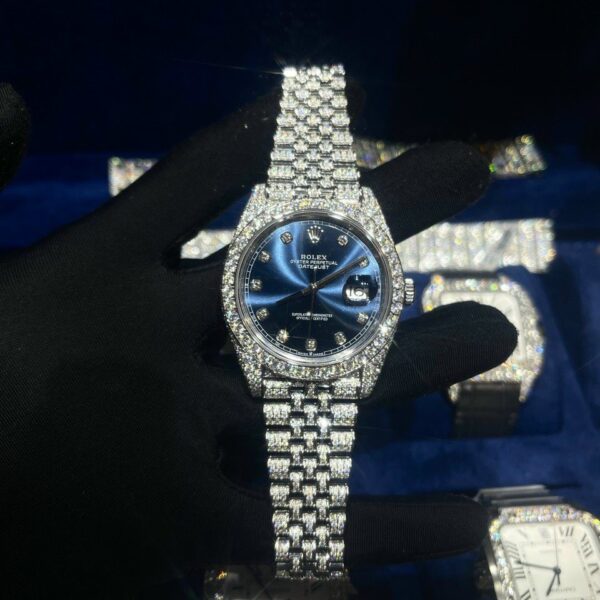
Blue Datejust Dials
Blue is one of the hardest colors to judge from product photography.
Under bright light it can appear much lighter and more metallic. Indoors it may become darker. Tilt the wrist and the color can change again.
That is why I would never judge a blue Datejust dial from one photograph.
Video helps.
Natural light helps even more.
The dial does not need to look spectacular in every frame. It needs to behave naturally as the light moves.
The Wimbledon Dial
Wimbledon is one of those dials people either notice immediately or barely think about.
The green Roman numerals give it a very different character from a traditional stick-marker Datejust.
Because the numerals are so prominent, spacing and printing naturally become more noticeable.
But do not turn QC into typography analysis.
Look at the complete dial first.
If everything appears balanced at normal viewing size, that matters more than discovering a tiny difference after twenty minutes of magnification.
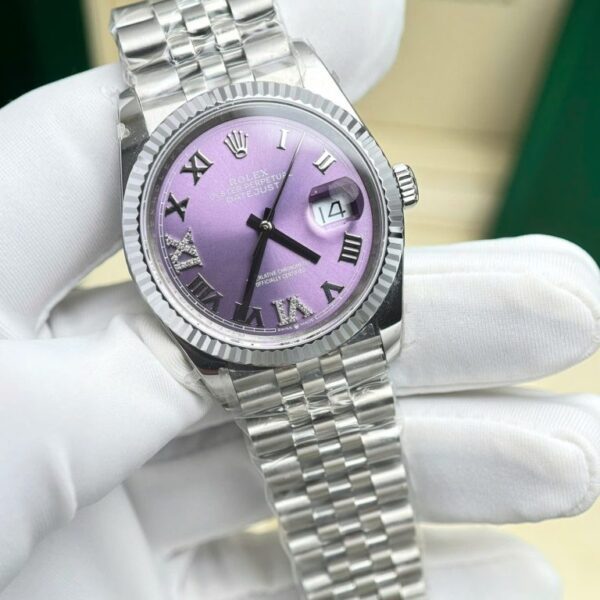
Green, Chocolate, Black and Mother-of-Pearl Dials
This is part of why the Datejust category gets so large.
You can take the same basic case and completely change the watch with the dial and bracelet.
A black dial with Oyster bracelet feels restrained.
Chocolate with two-tone construction becomes much warmer.
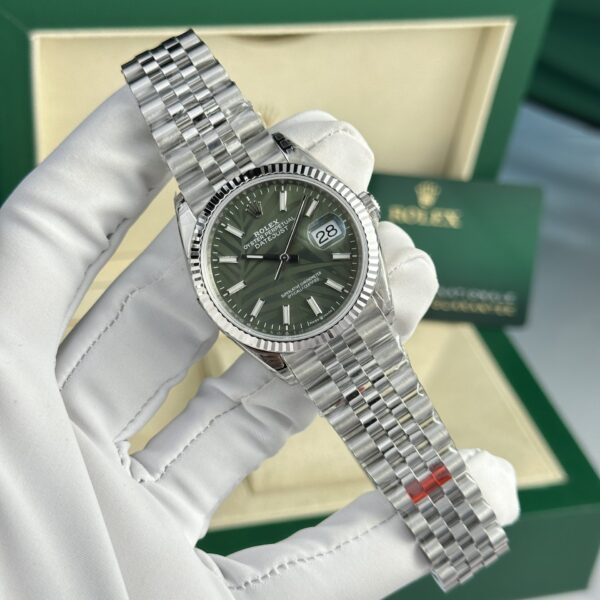
Green can make the watch feel more contemporary.
Mother-of-pearl and diamond-marker versions move much further toward jewelry.
There is no single Datejust look anymore.
For SEO that creates dozens of model variations. For the buyer it creates a much simpler problem: you eventually have to stop looking at all of them and pick the one you actually like.
3235 Clone Movement in Modern Datejust Replicas
Movement discussions usually begin after buyers have spent far too long comparing dials.
Then the watch arrives and the movement becomes something they interact with every day.
You feel the crown when you wind it.
You feel the setting positions.
You see how the date changes.
You hear the rotor.
Those details last much longer than the excitement of inspecting dial printing under magnification.
Many modern Datejust replicas use movements based around the 3235 architecture. If movement choice is important to you, read our 3235 clone movement guide before ordering.
It is much more useful to understand what movement is actually inside the watch than simply seeing “3235” somewhere in a product title.
VSF vs Clean Factory Datejust
This debate is probably never going away.
And that is fine.
Both names appear regularly when people compare higher-end Datejust replicas, but I would not treat either factory as the automatic winner for every dial, size and production batch.
Factories change.
New batches appear. Crystals change. Dials improve. Bracelets are revised. A comparison somebody wrote two years ago does not automatically describe the watch being shipped today.
On SuperCloneReps we have a dedicated guide to the best Datejust factories that goes deeper into VSF, Clean and the areas buyers tend to notice after wearing them.
Use factory reputation to narrow the decision.
Then inspect the actual watch.
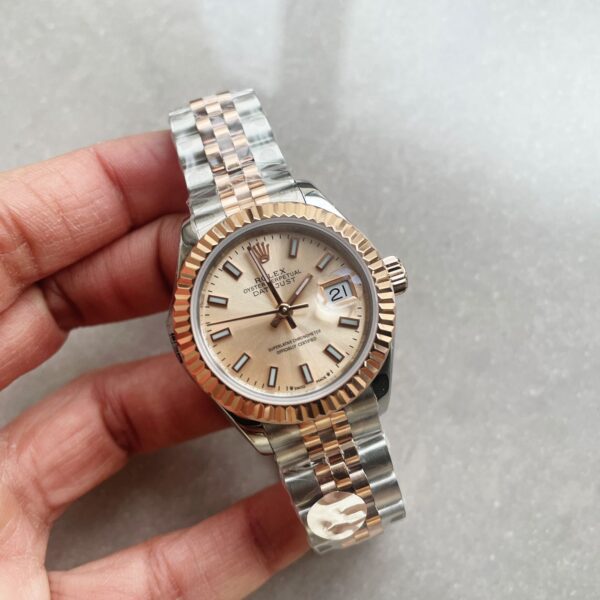
Gold, Two-Tone and Gold-Wrapped Datejust Models
Steel is relatively straightforward.
Gold-colored watches add another variable immediately: color.
A case can have good proportions and a convincing dial but still look wrong if the tone is too yellow, too pink or simply inconsistent between the bracelet and watch head.
That is why two-tone Datejust models deserve extra attention during QC.
Compare the center links with the bezel and crown. Look at the watch in more than one lighting condition if possible.
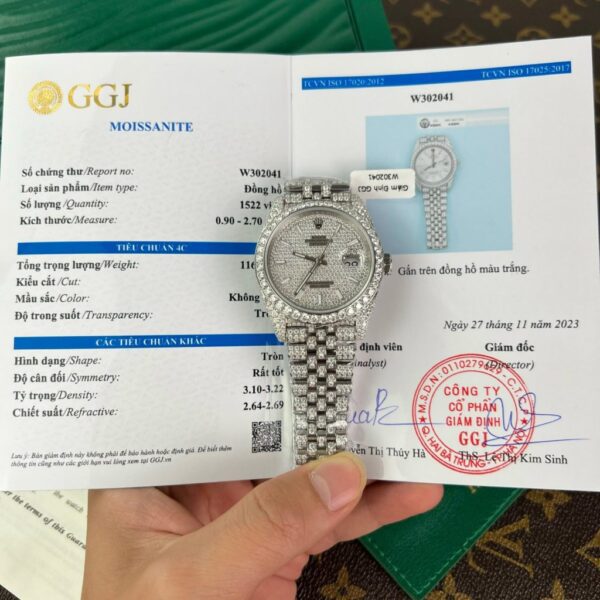
Custom gold-wrapped and stone-set pieces need to be judged for what they are rather than treated as identical to standard factory configurations.
Diamond and Moissanite Datejust Watches
Customized Datejust models are a separate category in practice.
The watch underneath still matters, but now you also need to inspect the setting.
Look at spacing.
Look at whether the stones sit at similar heights.
Check the edge of the bezel.
On fully set bracelets and cases, look for obvious gaps or rows that wander.
Bright studio lighting can make almost anything sparkle.
Clean setting is easier to judge when the watch is not moving.
What We Check During Datejust QC
The Datejust gives you a fairly clear inspection order.
Start with the whole watch.
Does the dial look balanced? Does anything immediately seem crooked or out of place?
Then check the date and Cyclops.
Look at the bezel.
Check the hands and markers.
Move outward to the case and bracelet.
Operate the crown and date mechanism. Check the clasp. Watch how the bracelet moves.
Where video is available, use it.
Photos tell you what something looks like when frozen at the best angle. Video shows how the crystal, dial, bracelet and movement behave.
Our Rolex super clone QC process explains the checks we use before dispatch.
Buyers reviewing their own QC media can also use our guide to reading QC photos before approving the watch.
Stop Looking for a Perfect Datejust
This is probably the most useful advice on the page.
There is a point where comparison stops helping.
You can enlarge a dial until the printing looks rough. You can draw alignment lines across every marker. You can compare the bezel reflection in two photographs taken under completely different lighting and convince yourself something is wrong.
Meanwhile, the bracelet might be the thing you actually notice every day.
The goal is not to prove that a replica is microscopically identical to a genuine watch.
It will not be.
The useful question is whether the important details have been executed well enough that nothing keeps pulling your attention away when you wear it.
That is a much more realistic standard.
Which Datejust Should You Choose?
Start with size.
36mm if you want the more restrained proportions.
41mm if you want more wrist presence.
31mm and 28mm if you prefer a smaller case or one of the many decorative configurations available in those sizes.
Then choose the bezel.
Fluted for the more recognizable Datejust look. Smooth if you want something quieter.
Then the bracelet.
Jubilee changes the character of the watch more than many people expect. Oyster keeps things simpler.
After that, choose the dial you actually want to look at every day.
Only then would I start worrying about factory.
People often do that process backwards.
Explore Rolex Datejust Super Clone Watches
Browse our Datejust collection to compare 28mm, 31mm, 36mm and 41mm configurations across different dials, bezels, bracelets, factories and movements.
For more detailed discussion about movements, factory differences, QC and bracelet construction, visit our watch guides and factory reviews.
You can also read how SuperCloneReps approaches individual watch inspection and factory comparison before choosing a particular version.
The Datejust is simple enough that every detail gets noticed eventually.
That is what makes a good one satisfying.
Not one perfect dial. Not one famous factory.
Just a collection of small things that work together well enough that you stop inspecting the watch and start wearing it.
Important: Watches offered by SuperCloneReps are independent reproductions. They are not manufactured, sponsored, approved or endorsed by Rolex SA and should never be represented or resold as authentic Rolex watches.
-
 Rolex Super Clone
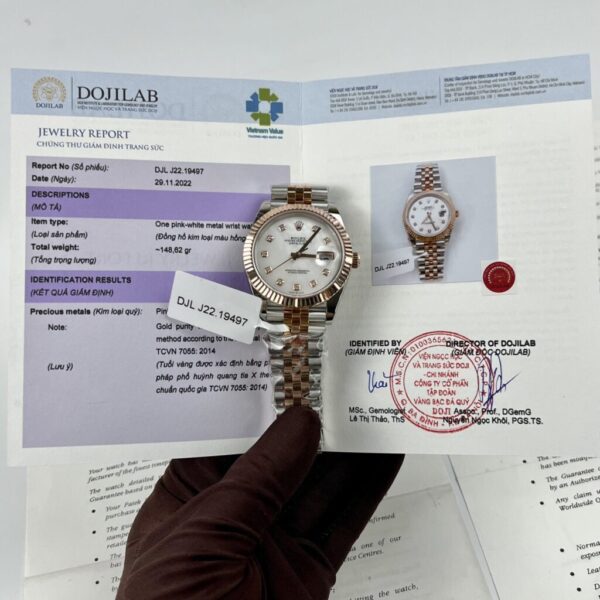
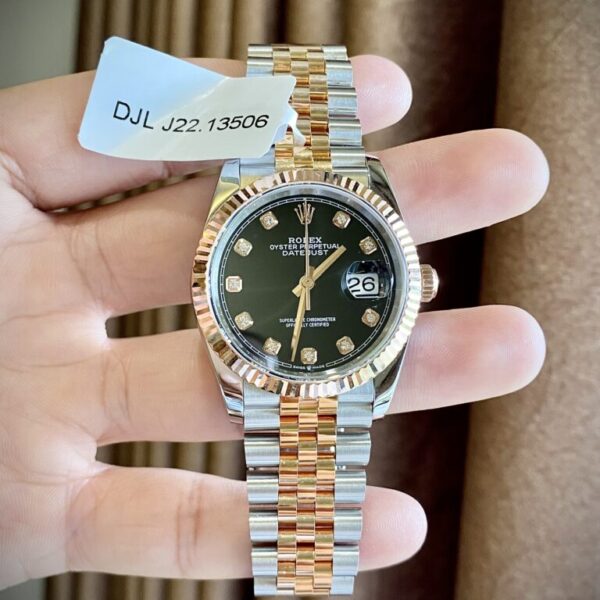
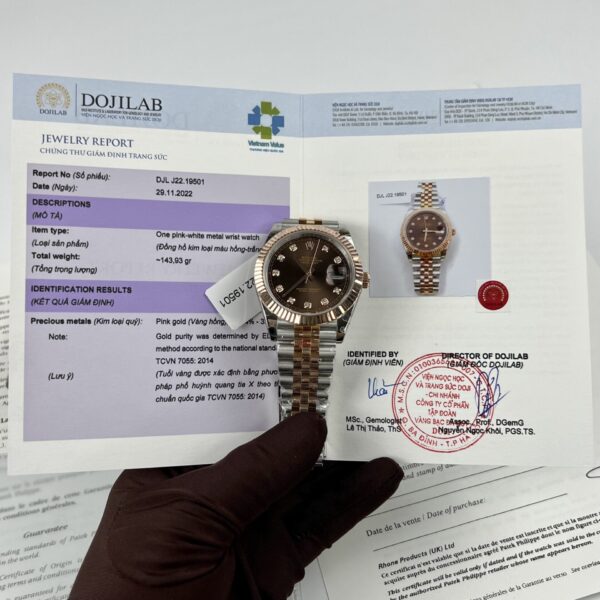
Rolex Datejust Men Chocolate Dial Bezel Diamonds Moissanite Clean Factory 41mm
$1,300.00 -

-

-

-
 Rolex Super Clone
Rolex DateJust 31mm Ladies 278289 BPF Blue /gold Dial 316L steel A2836 movement Super Clone
$1,200.00 -
 Rolex Super Clone
Rolex Datejust 31mm 278273 YG/SS White Dial Diamond Bezel on YG/SS Jubilee Bracelet Super Clone
$1,200.00 -
 Rolex Super Clone
Rolex Datejust 28mm 904L RG/SS Champagne Dial on RG/SS Jubliee Bracelet A2671
$1,200.00 -
 Rolex Super Clone
DateJust 36 SS 126233 ARF 1:1 Best Edition Black Diamonds Dial on Jubilee Bracelet SH3235
$1,400.00 -

-

-

-

-
 DateJust
Rolex Super Clone Watch DateJust 126331 Dial Mother Of Pearl Gold Wrapped GM Factory 41mm
Price range: $1,200.00 through $1,600.00Select options This product has multiple variants. The options may be chosen on the product page -
DateJust
Rolex Super Clone DateJust Black Dial Gold Wrapped GM Factory 36mm
Price range: $1,200.00 through $1,600.00Select options This product has multiple variants. The options may be chosen on the product page -
DateJust
Rolex Super Clone Watch DateJust Chocolate Dial Gold Wrapped GM Factory 41mm
Price range: $1,200.00 through $1,600.00Select options This product has multiple variants. The options may be chosen on the product page -