Your Shopping Cart

No products in the cart.
3285 Clone Movement: What It Changes in a GMT-Master II

You can tell a lot about a GMT movement without opening the watch. Unscrew the crown. Set the time. Jump the local hour hand. Watch what the date does when that hand crosses midnight, then repeat the whole thing a day later when you’re no longer in inspection mode. That tells you more about owning […]

Read More →
submariner black 2

Best Rolex Super Clone Factory for Submariner: VSF or Clean?

Ask around about the best Submariner replica factory and the conversation turns into VSF versus Clean almost immediately. That’s understandable. The Submariner doesn’t hide much. The dial is simple, the bezel takes up a lot of visual space, the bracelet matters more than people admit, and on date models the Cyclops makes even a slightly […]

Read More →
vsf watch submariner oyster

Can You Swim With a VSF Submariner?

I wouldn’t swim with a VSF Submariner until that specific watch passes a pressure test. That’s the whole answer, really. People put too much weight on the factory name, the screw-down crown, or a water-resistance number in a listing, and none of that proves the watch on your wrist is sealed well enough for a […]

Read More →
vsf-submariner-hulk

How Long Does a VSF Watch Last?

People ask this before buying a VS Factory watch for a reason: how long is it actually going to last? There isn’t a single honest answer. A good VSF can run for years, but the factory name doesn’t decide that by itself. The movement matters. So do water exposure, knocks, how often it’s worn, whether […]

Read More →
vsf factory submariner

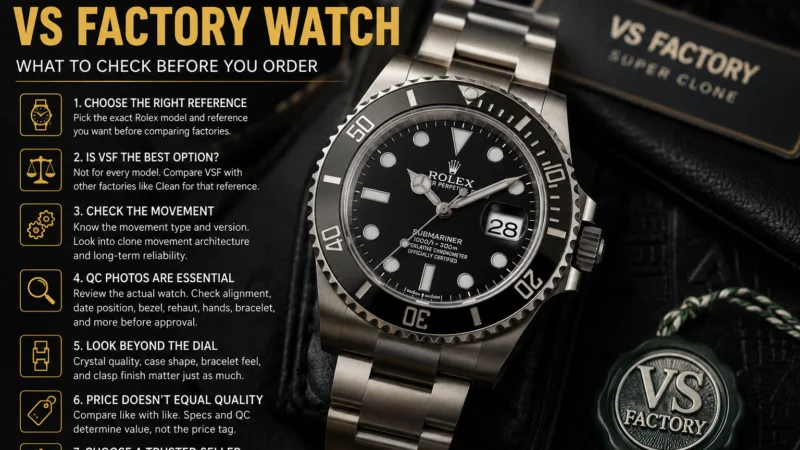
How to Buy a VS Factory Watch: What to Check Before You Order

Buying a VS Factory watch looks easy right up until you start comparing listings. Then the mess shows up: multiple references, different movement versions, small spec changes, and sellers slapping “VSF” on the title as if that settles everything. It doesn’t. The smarter way to buy is simpler than the listings make it seem. Pick […]

Read More →
vsf watches

VSF Factory Watches

There’s a moment almost every replica buyer hits while researching. Everything starts out meaningless. Then, after a few nights of forum tabs and product photos, the same factory names keep showing up. VSF Submariner. VSF Datejust. VSF Seamaster. VS3235. One person swears a factory is the only safe choice. Another insists a different factory is […]

Read More →
rolex models

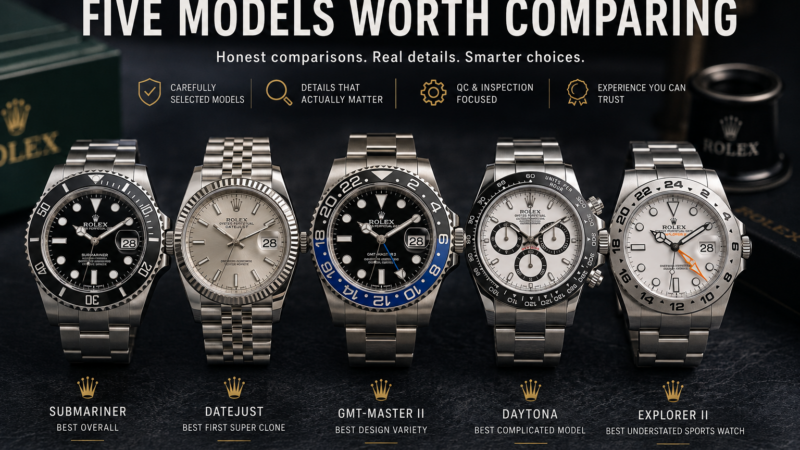
Best Rolex Super Clone Watches in 2026: Five Models Worth Comparing

Updated August 3, 2026 by the SuperCloneReps Editorial Team There isn’t one “best” Rolex super clone for everyone. Period. Some buyers want something quiet enough for everyday wear. Others obsess over the movement, bezel color, or a specific reference they’ve tracked for years. And here’s the problem: a replica that looks convincing in listing photos […]

Read More →
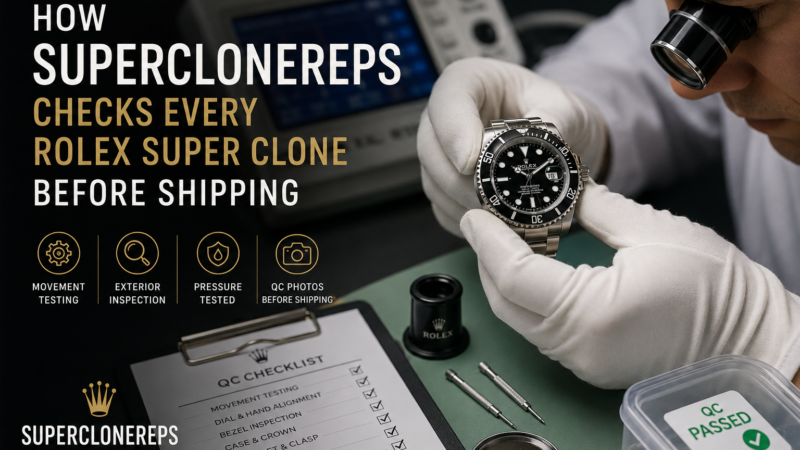
How SuperCloneReps Checks Every Rolex Super Clone Before Shipping A step-by-step look at our movement testing, exterior inspection, pressure checks and QC-photo process. Updated August 6, 2026 · SuperCloneReps Editorial Team Buying a Rolex super clone online usually involves more trust than most buyers are comfortable with. A product page can show a carefully selected sample, but that does not tell you much about the individual watch that will eventually arrive at your door. The actual piece could have a slightly off-center date, a bezel that does not sit quite where it should, a loose bracelet screw, a rough clasp or a movement behaving differently from the sample shown online. That is why SuperCloneReps checks each Rolex super clone before shipment instead of treating the factory description as the final word. Our inspection focuses on four broad areas: Movement and timing Case, dial and bracelet quality control Pressure and water-resistance testing where applicable QC photographs of the actual watch before shipment These checks are not authentication of a genuine Rolex. The watches are replicas, and inspection does not change that. The purpose is much simpler: make sure the correct watch has been sourced, check its condition and operation, and catch obvious mechanical or cosmetic problems before it leaves for the buyer. Why Pre-Shipment Inspection Matters Replica-watch quality is not always completely consistent, even when two pieces come from the same factory and production batch. One watch may have a better-centered date than another. One bezel may line up more cleanly at twelve. A bracelet may arrive with every screw properly seated, while another from the same batch has one that needs attention. On a chronograph, everything may operate correctly except for a seconds hand that resets a fraction away from twelve. That variation is why factory reputation alone is not enough. Factory names can help buyers understand the general source, construction and expected quality level of a model, but they cannot guarantee that every individual watch leaves production in exactly the same condition. For that reason, our inspection is performed on the actual watch allocated to the customer rather than only relying on stock photographs or a factory sample. Step 1: Confirming the Correct Watch The first check is basic, but it matters. Before looking at the finer details, we confirm that the watch received matches the order. That can include: Model family Reference style Factory Case size Dial color Bezel configuration Bracelet type Any special configuration requested by the buyer It sounds obvious until two very similar watches are sitting next to each other. A black-dial Submariner Date and a no-date Submariner may look similar at first glance, but they are obviously not interchangeable. The same applies to different GMT-Master II bezel combinations, Datejust bracelet choices or Daytona dial variations. The watch is therefore checked against the order details before the mechanical and cosmetic inspection begins. Step 2: Movement and Timing Inspection The movement check starts with normal operation. The crown is tested through the positions available on that particular watch. We check winding, time setting and date adjustment where a calendar function is present. The hands should move normally without binding, touching one another or behaving unexpectedly. Depending on the model, movement testing can include: Starting and maintaining normal operation Manual winding Crown-position testing Hour and minute hand adjustment Date setting and date change GMT-hand adjustment Chronograph start, stop and reset Power-reserve observation where practical Basic rate and timing review The exact process changes with the watch. A Submariner-style watch has a relatively straightforward operating system. A GMT adds another adjustable hand. A Daytona-style chronograph introduces pushers, chronograph engagement and reset functions that also need to be checked. There is little value in applying the exact same checklist to every model when the movements perform different functions. What We Look for During Timing Checks Mechanical watches are not quartz watches. Small variations in daily rate are normal, including in higher-grade automatic movements. The purpose of our timing check is therefore not to advertise laboratory-level accuracy. We are looking for unusual behavior. That can include: A movement stopping shortly after winding A rate changing dramatically during observation A crown that feels unusually rough A date mechanism that does not engage properly A GMT hand that cannot be adjusted as expected A chronograph hand failing to reset Excessive rotor noise Obvious internal resistance during adjustment If a watch shows a significant mechanical problem, it is held back rather than automatically approved for shipment. Step 3: Dial and Hand Alignment The dial is checked from a straight, front-facing position. This matters more than it sounds. Angled photographs can make a perfectly acceptable marker appear crooked. They can also hide a genuine alignment issue depending on the direction of the camera. A straight-on view usually gives the clearest picture. The dial inspection can include: Twelve, three, six and nine o'clock marker positioning Alignment of the remaining hour markers Coronet placement Dial printing Minute-track consistency Hand alignment Luminous marker condition Visible dust or debris Date-window positioning Cyclops placement on date models The goal is not to reject watches over microscopic differences that would never be noticed during normal wear. We are looking for visible issues that would reasonably bother the buyer once the watch is actually on the wrist. Date Alignment The date window tends to get a lot of attention on Rolex-style watches, and understandably so. The number should sit reasonably close to the center of the opening rather than appearing pressed against the top, bottom or one side. The cyclops should also sit correctly over the date window. Date appearance can vary slightly as the wheel changes from single-digit to double-digit numbers, so where further inspection is necessary, it is better to look beyond a single date rather than judging the entire mechanism from one number. Step 4: Bezel and Crystal Inspection On sports models, the bezel has a major effect on how the entire watch looks. With a Submariner or GMT-Master II style, we check the bezel's visual relationship with the twelve o'clock dial marker. The insert, engraved numerals, luminous pearl and overall condition are also reviewed. Where the bezel rotates, its operation is tested. It should move consistently and settle into the expected positions. Construction can vary between models, and a small amount of play may be present, but excessive looseness or irregular movement can indicate a problem. The crystal is also checked for: Visible scratches Chips around the edge Distortion Dust beneath the crystal Cyclops alignment Unusual haze or cloudiness Crystal quality is one of those details that can affect the appearance of everything underneath it. A dial can be well made, but if the crystal looks cloudy or distorted, the entire watch appears worse. Step 5: Case, Crown and Exterior Review The case is inspected from the front, sides and back. At this stage, we are looking for issues that may have appeared during manufacturing, factory handling or transportation before the watch reached us. The exterior review covers areas such as: Case finishing Lug condition Crown operation Crown-guard symmetry Caseback condition Pusher operation on chronographs Engravings Visible scratches Plating or wrapping consistency where applicable On models with a screw-down crown, the crown should screw down and release normally. It should not feel cross-threaded or require excessive force. Chronograph pushers receive their own check. They should engage the functions properly without sticking or feeling unusually loose. Step 6: Bracelet and Clasp Quality Control The bracelet is often one of the most revealing parts of a replica watch during daily use. People naturally focus on the dial because that is what photographs show best. In reality, you interact with the bracelet and clasp every time the watch goes on or comes off your wrist. Our bracelet inspection includes: Link articulation End-link fit Screw condition Bracelet alignment Clasp closure Adjustment mechanism Sharp or unfinished edges Excessive looseness Visible scratches The clasp should close securely and release the way it is designed to. Bracelet links should articulate normally without grinding against one another, and where an adjustable clasp includes an extension or micro-adjustment system, that mechanism is checked where practical. A feature is not particularly useful if it jams the first time someone tries to resize the bracelet. Tiny things, but that is how this hobby works. The bracelet can give away poor overall quality faster than the dial. Step 7: Pressure and Water-Resistance Testing Water resistance needs careful wording with replica watches. A watch inspired by a professional dive model should not automatically be treated as safe for swimming simply because the original version was designed for the water. Water resistance depends on the individual watch and its assembly, including the crown, crystal, caseback, gaskets and seals. Where pressure testing is included for a particular watch, the piece is checked before shipment using the applicable testing method. The purpose is to identify an obvious sealing problem. It is not intended to suggest that a replica has passed genuine Rolex factory testing or professional dive-watch certification. Even after a successful pre-shipment pressure check, sensible precautions still matter. Water resistance can change over time. Gaskets age. A crown can be left unscrewed. A watch can be opened for adjustment or servicing. Buyers who plan to regularly swim or expose their watch to significant amounts of water should consider having it pressure tested locally after receiving it. Step 8: QC Photographs Once the physical inspection is complete, QC photographs are prepared for the buyer. Depending on the model, the images may include: Straight dial view Angled dial view Left side of the case Crown side Caseback Bracelet Clasp Date close-up Bezel close-up Movement view where relevant and available The important part is that these photographs show the actual watch allocated to the order. The buyer is not being asked to approve a factory sample that may have been photographed months earlier. QC images also need some perspective. Extreme macro photographs can make tiny manufacturing tolerances look dramatic, while photographs taken too far away can hide genuine problems. The objective is to give the buyer a useful, realistic view of the watch before it is dispatched. Step 9: Final Approval or Rejection A watch is not automatically approved simply because it came from a well-known factory. The required checks are completed first. If a minor and correctable issue is discovered, it may be addressed before shipment. If the watch has a significant mechanical, alignment, bracelet, exterior or sealing problem, that piece is rejected rather than knowingly shipped to the customer. We then source another example from the supplier. The replacement goes through the same inspection process from the beginning. If that piece also has an unacceptable issue, it is rejected as well. We continue sourcing and checking replacement pieces until we receive one that meets our quality-control standards and is suitable to present to the buyer. This can occasionally add time to an order, but resolving a problem before international shipping is considerably easier than dealing with it after the watch has already arrived. What the Buyer Receives Before shipment, the buyer receives QC photographs of the actual watch allocated to the order. These photographs allow the buyer to look over the visible details before dispatch, including the dial, bezel, case, bracelet, clasp and date alignment where applicable. Depending on the watch and the checks performed, the inspection may also include movement testing and pressure-test information. If the buyer identifies a reasonable QC concern after reviewing the photographs, the issue is reviewed again before the watch is shipped. When the concern is confirmed and the watch does not meet our quality-control standards, that piece is rejected and another example is sourced. The replacement watch then goes through the inspection process as well. The idea is simple: the buyer should have the opportunity to see the actual watch being sent rather than discovering an obvious issue only after opening the package. What This Process Does Not Mean Quality control is meant to confirm condition, operation, configuration and the inspection status of the watch. It is not genuine Rolex authentication. Super clone watches are replicas. Terms such as "super clone," "1:1" and "clone movement" are terms commonly used within the replica-watch market. They are not Rolex classifications and they are not independently regulated quality standards. Pre-shipment inspection also does not make a mechanical watch maintenance-free. Automatic movements can eventually require regulation, cleaning, lubrication or repair. Impacts during transportation or everyday wear can affect performance after the initial inspection. Water resistance can also change as seals age. The purpose of QC is to reduce avoidable problems and catch obvious issues before shipment, not to promise that a mechanical watch will never require maintenance. Frequently Asked Questions Does SuperCloneReps authenticate Rolex watches? No. SuperCloneReps inspects Rolex super clone watches for condition, operation, configuration and visible quality-control issues. The process is not authentication of genuine Rolex watches. Authenticating a genuine Rolex would involve determining whether the watch and its components were manufactured or approved by Rolex. That is not the purpose of replica-watch QC. How long does the inspection take? The time varies. It depends on the model, availability, movement complexity, the checks required and whether the first watch sourced passes inspection. If the original piece is rejected and another watch has to be ordered, the process naturally takes longer because the replacement must go through the same inspection rather than being shipped immediately. What happens when a watch fails inspection? It is not approved for shipment. If we find a significant movement, alignment, exterior, bracelet or pressure-related issue, we reject that piece and order another example from the supplier. The replacement is then inspected in the same way. We continue sourcing and checking replacement pieces until we receive one that meets our QC standards and is suitable to show to the buyer for approval. It may add some time to the order, but we would rather delay shipment than knowingly send a watch with a problem we already found. Does every buyer receive QC photographs? Yes. QC photographs are provided before shipment and show the actual watch allocated to the buyer's order rather than only a generic product or factory photograph. Does pressure testing mean the watch is safe for swimming? Not necessarily. Pressure testing can identify sealing problems at the time the test is performed, but it should not be treated as a lifetime water-resistance guarantee. Gaskets and seals can change over time, and opening the watch for servicing or adjustment can also affect water resistance. Anyone planning regular swimming or significant water exposure should consider having the watch tested locally after receiving it. Is every watch from a well-known factory automatically approved? No. Factory reputation can be useful when comparing the general construction and accuracy of different models, but every individual piece still needs to be checked. Batch variation, assembly differences, handling and transportation can all affect a single watch. A factory name tells us where the watch came from. It does not replace inspection of the actual piece being shipped. Can a buyer reject a watch after seeing the QC photographs? Yes. If the buyer spots a reasonable QC concern in the photographs before shipment, we review the issue. If the concern is confirmed and the watch does not meet our quality-control standards, that piece is rejected and another watch is sourced. The replacement must then pass through the same QC process before it is presented to the buyer. Final Thoughts A product title and a factory name can tell you what a watch is supposed to be. They cannot tell you the condition of the individual piece sitting inside the package. That is where pre-shipment quality control matters. SuperCloneReps checks movement operation, timing behavior, dial and bezel alignment, case condition, bracelet function, pressure-test status where applicable and the overall configuration of the watch. QC photographs then give the buyer a chance to look at the actual piece before dispatch. Rolex Super Clone QC: How We Inspect Watches Before Shipping What a good inspection process can do is much more practical: catch obvious problems early, check the actual watch rather than relying on factory photographs, and give the buyer a clearer idea of what is being shipped before it leaves.

Rolex Super Clone QC: How We Inspect Watches Before Shipping

Why “Same Model” Still Arrives Different Buying a Rolex super clone online comes down to trust. That’s uncomfortable, because a listing is never the whole story. Most product pages show a polished sample. Your watch might land with a date window that’s slightly off-center, a bezel that doesn’t sit exactly where it should, a clasp […]

Read More →
VIP EXCLUSIVE VOUCHER

Claim $150 OFF Today

Direct factory instant savings applied to all 1:1 Swiss clone collections.

SAVE150